How to Live a Simple Life:
Nearly 70 percent of people feel overwhelmed by clutter in their own homes, and most notice their stress rising because of it [Source: Grand Rising Behavioral Health, 2025]. If that sounds familiar, you are not alone, and you are not stuck.
Learning how to live a simple life is not about giving up everything you own or moving to a cabin in the woods. It is about clearing away the noise so you can focus on what actually matters to you. In this guide, you will learn what simple living really means, the science backed benefits behind it, and a full step by step plan to simplify your home, your money, your schedule, and your mindset. You will also find a comparison table, real examples, and answers to the most common questions people ask about living simply in America today.
By the end, you will have a clear, realistic path toward a calmer, more intentional life, no matter how busy or complicated your current routine feels.
Table of Contents
What Does It Mean to Live a Simple Life?
The Real Benefits of Living a Simple Life, Backed by Research
How Can You Start Living a Simpler Life Today?
Declutter Your Home and Mind: A Step by Step Framework
How Do You Live a Simple Life Financially?
Simple Living and Faith: Christian and Catholic Approaches to Simplicity
Is It Okay to Want a Quiet, Simple Life in a Busy World?
5 Daily Habits That Keep Your Life Simple and Peaceful
FAQ: People Also Ask
Conclusion
What Does It Mean to Live a Simple Life?
Living a simple life means intentionally reducing the possessions, commitments, and distractions that do not add real value, so you have more time, money, and energy for what matters most. It is a mindset first and a set of habits second.
Many people confuse simple living with minimalism, but they are not identical. Minimalism usually centers on owning fewer physical items. Simple living is broader. It includes your schedule, your finances, your relationships, and even your digital habits. A person who lives simply might own plenty of things, but they choose everything on purpose instead of by accident or impulse.
What Do You Call a Person Who Lives a Simple Life?
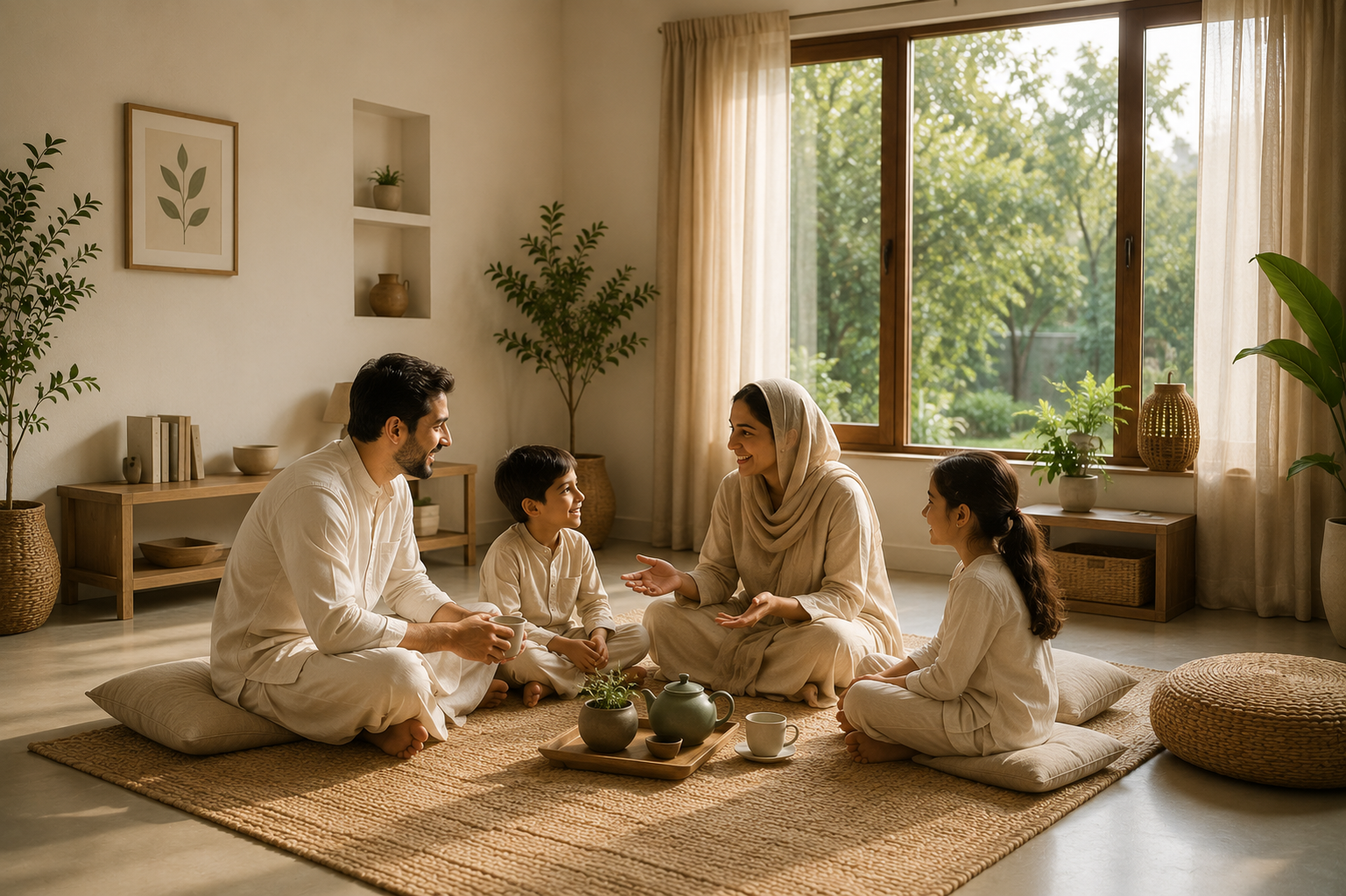
Someone who lives a simple life is often called a minimalist, a simple liver, or someone practicing voluntary simplicity. Voluntary simplicity is actually the academic term researchers use most often, and it describes a deliberate choice to reduce consumption in favor of well being [Source: PMC, National Institutes of Health, 2023].
Simple Living vs Minimalism vs Frugal Living
These three terms overlap, but they are not the same thing. The table below breaks down the key differences so you can see where your own goals fit.
| Lifestyle | Main Focus | Typical Habits | Best For |
| Simple Living | Overall life intentionality | Fewer commitments, mindful spending, less clutter | People who want balance across every area of life |
| Minimalism | Physical possessions | Owning fewer items, capsule wardrobes, empty spaces | People who feel overwhelmed by stuff specifically |
| Frugal Living | Money management | Budgeting, saving, cutting expenses | People focused mainly on financial goals |
Most people who want to simplify their lives borrow ideas from all three categories, and that is perfectly fine. There is no single correct formula.
The Real Benefits of Living a Simple Life, Backed by Research
Simplifying your life lowers stress, improves focus, and increases satisfaction, and these outcomes are supported by peer reviewed research, not just personal opinion. That matters because vague promises about happiness do not hold up under scrutiny, but the data on simple living does.
Lower Stress and Cortisol Levels
Clutter is not just an eyesore. Researchers at UCLA’s Center on Everyday Lives of Families found that cluttered homes are directly linked to higher stress hormone levels, especially in women [Source: UCLA Center on Everyday Lives of Families, cited in Longevity, 2025]. A cluttered environment sends a constant signal to your brain that work is never finished, which keeps your nervous system on edge.
Better Mental Well Being
A 2023 study published through the National Institutes of Health found a statistically significant positive relationship between minimalism and overall well being among millennials, noting that decluttering released feelings of joy and peacefulness while freeing up mental energy [Source: PMC, National Institutes of Health, 2023].
More Financial Breathing Room
The average American household now carries over 11,500 dollars in credit card debt as of early 2026 [Source: WalletHub, 2026]. Total consumer debt in the United States climbed to 18.57 trillion dollars in 2025 [Source: Experian, 2025]. Simple living, especially the frugal side of it, directly counters the habits that drive these numbers up. Fewer impulse purchases and less lifestyle inflation mean more money stays in your pocket instead of going toward interest payments.
Improved Focus and Productivity
Over half of professionals report wasting more time searching for files and information than actually doing productive work, largely due to digital clutter [Source: Lifeminnt, 2026]. Simplifying your digital environment, not just your physical one, protects your attention and gives you back hours every week.
Stronger Relationships and Gratitude
Gratitude practices, which are common among people pursuing a simple life, have been shown to raise life satisfaction by nearly 7 percent while lowering anxiety and depression symptoms [Source: Research.com, 2026]. Because simple living removes distractions, it naturally creates more space for the relationships and small joys that build genuine happiness.
How Can You Start Living a Simpler Life Today?
You can start living a simpler life today by choosing one area, your home, your schedule, or your spending, and removing just one unnecessary thing from it. Small, consistent actions build momentum faster than one dramatic overhaul.
Start With a Values Audit
Before you throw anything away or cancel a single subscription, get clear on what actually matters to you. Grab a notebook and write down your top five priorities. For most people, these include family, health, financial security, creativity, and rest. Every decision going forward should be measured against this list. If an item, habit, or commitment does not support one of these priorities, it is a candidate for removal.
Set One Small Goal This Week
Instead of trying to simplify your entire life in a weekend, pick a single, specific action. Examples include:
- Clearing off one kitchen counter completely
- Unsubscribing from ten marketing emails
- Saying no to one optional commitment
- Cooking one simple meal instead of ordering delivery
Research shows that people who start with small decluttering projects are roughly 80 percent more likely to stick with minimalist habits long term compared to those who attempt a total overhaul all at once [Source: Longevity, 2025].
Learn to Say No Without Guilt
A simple life requires boundaries. Every yes to something unimportant is a no to something that matters more. Practice a short, polite script such as, I am not able to take this on right now, thank you for thinking of me. You do not owe anyone a lengthy explanation.
Reduce Decision Fatigue
The more small decisions you make each day, the less mental energy you have left for the big ones. Simplify recurring choices by creating a basic weekly meal rotation, choosing a small set of go to outfits, or automating your savings and bill payments. This is one of the fastest ways to live a more simple life without feeling deprived.
Declutter Your Home and Mind: A Step by Step Framework
Decluttering your home is the most visible and often the fastest way to feel the effects of simple living, because a calmer space creates a calmer mind almost immediately. Follow this framework room by room instead of trying to tackle your whole house at once.
The Four Box Method
Grab four boxes or bags and label them Keep, Donate, Trash, and Relocate. Move through one room at a time. Pick up every item and ask a single question: does this add real value to my life? If the answer is no, it goes into one of the other three boxes. This method works because it forces a decision on every single object rather than letting things pile back into limbo.
Tackle the Hardest Areas Last
Start with easy zones, such as a junk drawer or bathroom cabinet, before moving to emotionally difficult areas like a childhood bedroom or a deceased relative’s belongings. Building small wins first makes the harder decluttering sessions more manageable later.
Declutter Your Digital Life Too
A simple life in the modern world has to include your phone and computer. Digital clutter triggers stress and anxiety levels that are comparable to physical clutter [Source: Lifeminnt, 2026]. To simplify your digital space:
- Delete apps you have not opened in 30 days
- Unsubscribe from newsletters you skip every time
- Turn off non essential notifications
- Organize files into no more than five main folders
Maintain It With a Weekly Reset
A ten minute reset every Sunday prevents clutter from creeping back in. Put items away, clear surfaces, and do a quick digital cleanup. Consistent maintenance takes far less time than a full scale decluttering session every few months.
How Do You Live a Simple Life Financially?
You live a simple life financially by spending intentionally, tracking where your money goes, and prioritizing savings over status purchases. Financial simplicity is often the single biggest stress reducer because money worries touch almost every other part of daily life.
Build a Bare Bones Budget
List your true essentials, housing, utilities, groceries, insurance, and minimum debt payments. Everything else is optional. This does not mean you cannot spend on things you enjoy, but it means you know exactly how much flexibility you actually have each month.
Avoid Lifestyle Creep
As income rises, spending tends to rise right along with it, which quietly cancels out any financial progress. The average credit card balance climbed to 6,715 dollars per person by the fourth quarter of 2025, an increase driven partly by rising everyday costs and partly by lifestyle inflation [Source: Motley Fool, 2026]. Keeping your spending flat even as your income grows is one of the fastest paths to real financial simplicity.
Practice the One In, One Out Rule
For every new item you buy, remove one similar item from your home. This single habit naturally slows down consumption without requiring a strict no spending rule, which makes it far easier to sustain long term.
Automate Your Savings
Set up an automatic transfer to a savings account the same day your paycheck arrives. When saving is automatic, you never have to rely on willpower, and your simple, frugal life becomes self sustaining.
Simple Living and Faith: Christian and Catholic Approaches to Simplicity
Simple living has deep roots in Christian and Catholic tradition, where simplicity is viewed as a spiritual discipline rather than just a lifestyle trend. For many believers, learning how to live a simple Christian life or a simple Catholic life is really about detachment from material things in order to focus more fully on faith, family, and service.
The Spiritual Case for Simplicity
Many Christian traditions teach that excessive attachment to possessions can crowd out gratitude, generosity, and prayer. Choosing simplicity is often framed less as deprivation and more as freedom, freedom from constant comparison, debt, and distraction, so there is more room for what these traditions consider truly important.
Practical Ways to Live a Simple Christian or Catholic Life
- Set aside quiet time each day for prayer or reflection before checking your phone
- Practice regular giving, whether through tithing, charity, or simply helping a neighbor
- Choose experiences and time with family over accumulating more possessions
- Observe simple, consistent rhythms, such as a weekly day of rest
It Is a Practice, Not a Destination
Just like secular simple living, the faith based version is rarely about reaching a finished state. It is an ongoing practice of returning to what matters whenever life gets noisy again.
Is It Okay to Want a Quiet, Simple Life in a Busy World?
Yes, it is completely okay to want a quiet, simple life, even in a culture that often rewards busyness and visible achievement. Wanting less noise and more peace is not a character flaw, and it does not mean you lack ambition.
Does Simple Living Mean Being Unhappy?
No, simple living does not mean being unhappy. In fact, the opposite tends to be true. Studies consistently link decluttering and intentional living to lower anxiety, better mood, and stronger overall well being [Source: Grand Rising Behavioral Health, 2025]. What people often lose is not happiness, but the constant low grade stress that clutter and overcommitment create.
Why the Desire for Simplicity Is Growing
A growing number of younger Americans say they would accept lower pay for a less stressful, more balanced life, and quality of life now consistently outranks pure income growth as a top priority in national surveys [Source: John Rector, 2025]. This shift reflects a broader cultural pivot away from constant hustle toward sustainable, intentional living.
Living a Simple Life in America Specifically
Simple living in America comes with unique challenges, including consumer culture, social media comparison, and a fast paced work environment. Even so, plenty of people are building quiet, simple lives here through smaller housing choices, single income households, reduced screen time, and community centered living. It is entirely possible, it just usually requires more intentional effort than it does in cultures with less consumer pressure.
If You Search Simple Living on Reddit
Communities discussing how to live a simple life on Reddit often emphasize practical, low pressure advice, things like buying secondhand, cooking at home, canceling unused subscriptions, and spending more time outdoors. The recurring theme across these communities is that simplicity is personal. What feels simple to one person may feel restrictive to another, so the goal is finding your own version rather than copying someone else’s exactly.
5 Daily Habits That Keep Your Life Simple and Peaceful
Small daily habits protect the progress you make when you declutter and simplify, because without maintenance, complexity tends to creep back in over time. These five habits are easy to start today.
- Do a ten minute evening reset. Put things back where they belong before bed so you wake up to a clear space.
- Practice one minute of gratitude. Write down three things you are grateful for each morning. This habit alone has been linked to meaningfully higher life satisfaction scores [Source: Research.com, 2026].
- Batch your errands and decisions. Group similar tasks together instead of scattering them throughout the week, which reduces decision fatigue significantly.
- Protect one screen free hour daily. Use this time to read, walk, or connect with family instead of scrolling.
- Ask before you buy. Wait 24 hours before any non essential purchase over 50 dollars. This single pause habit prevents most impulse buying.
These habits are simple by design. That is the point. A complicated system for simplifying your life defeats the purpose entirely.
FAQ: People Also Ask
What does it mean to live a simple life?
Living a simple life means intentionally reducing possessions, commitments, and distractions to focus on what truly matters. It is a mindset centered on values rather than accumulation. Most people build it gradually through small daily choices, not a single dramatic change.
How can you live a simple life?
Start with one small action, decluttering one drawer, canceling one subscription, or saying no to one optional commitment. Build momentum through consistency rather than a total overhaul. Over time, these small habits compound into a genuinely simpler lifestyle.
Is it okay to want to live a simple life?
Yes, wanting simplicity is a valid and increasingly common goal. It does not mean lacking ambition. Research links intentional, simplified living to lower stress and higher overall satisfaction, making it a healthy choice rather than a compromise.
Does simple living mean being unhappy?
No. Simple living is associated with lower anxiety and higher well being in multiple studies. What people give up is excess stress and clutter, not happiness. Most report feeling more content, not less, after simplifying.
What are 5 ways to live a simple life?
Declutter one area weekly, build a bare bones budget, automate your savings, protect a daily screen free hour, and practice a short gratitude habit each morning. Together, these five actions cover the physical, financial, and mental sides of simplicity.
What is the difference between minimalism and simple living?
Minimalism focuses mainly on reducing physical possessions. Simple living is broader and includes finances, schedules, relationships, and digital habits. Many people blend both approaches based on their personal goals.
How do you live a simple life on a budget in America?
Track every dollar, cut unused subscriptions, cook at home more often, and automate savings so you are not relying on willpower. Combined with mindful spending habits, these steps make simple, frugal living realistic even on a modest income.
What book should I read to learn how to live a simple life?
There are many well known books on the topic, and most public libraries carry several titles specifically about voluntary simplicity and minimalism. Look for ones that match your specific focus, whether that is home organization, finances, or spiritual simplicity.
Conclusion
Learning how to live a simple life is not about perfection, and it is not about owning nothing. It comes down to three key takeaways. First, simplicity touches every part of life, your home, your money, your schedule, and your mindset, not just your closet. Second, the benefits are real and measurable, including lower stress, better focus, and stronger financial stability. Third, small consistent habits beat dramatic overhauls every time.
Pick one idea from this guide, whether it is the four box decluttering method, the bare bones budget, or a simple gratitude habit, and start today. A calmer, more intentional life is built one small choice at a time, and you do not need to wait for the perfect moment to begin.
References & Further Reading
- Grand Rising Behavioral Health (2025). The Mental Health Benefits of Minimalism.
- PMC, National Institutes of Health (2023). Goodbye Materialism: Exploring Antecedents of Minimalism and Its Impact on Millennials Well Being.
- WalletHub (2026). Credit Card Statistics.
- Experian (2025). Experian Study: Average U.S. Consumer Debt and Statistics.
- Lifeminnt (2026). The 2026 Minimalism Guide: Lifestyle Trends and Proven Benefits.
- Research.com (2026). Scientific Benefits of Gratitude: Mental Health Research Findings.
- Longevity.direct (2025). Declutter Your Life: Minimalism’s Surprising Impact on Health, citing UCLA Center on Everyday Lives of Families.
- Motley Fool (2026). Average American Credit Card Debt Research.
- John Rector (2025). Global Minimalist Lifestyle Trend: Current Status and Future Outlook.