How to Make Your Face Look More Attractive Naturally: The Complete 2026 Guide
Half of Americans worry about how fast their face is aging, yet only half of them actually do anything about it [Source: American Academy of Dermatology, 2025]. That gap between worry and action is where this guide starts.
Search how to make your face look more attractive naturally and you will find plenty of generic tip lists. This guide takes a different angle: it looks at what actually shapes how a face gets perceived as attractive, drawing on facial perception research rather than just routine building. If you want the full day-to-day skincare and grooming routine, our companion guide on how to get a beautiful face naturally covers that in more depth. This article focuses specifically on attractiveness: what features and habits shift how attractive a face reads to other people, and why.
In this guide you will learn what actually shapes facial attractiveness, why some generations seem to age faster than others, how to look pretty without makeup, and the habits most closely tied to how attractive a face is perceived. Every claim traces back to a dermatologist, a psychologist, or a peer reviewed study.
Table of Contents
What Makes a Face Attractive? The Science Explained
What Are the 7 Signs of Beauty?
Skincare Habits That Make Your Face Naturally Glow
Why Is Gen Z Looking So Old, and What Ages a Face the Most?
Grooming and Styling Tricks for a More Attractive Face
How Can I Look Pretty Without Makeup?
Lifestyle Habits That Keep Your Face Looking Younger Longer
How Can I Look More Attractive as a Guy?
FAQ: People Also Ask
Conclusion
What Makes a Face Attractive? The Science Explained
Facial attractiveness is shaped less by perfect symmetry than most people assume, and more by skin health, expression, proportion, and grooming choices you can influence. That sentence alone overturns a myth that has circulated for decades.
Popular articles have long claimed that a perfectly symmetrical face is the single biggest driver of attractiveness. The newer research paints a messier picture. A 2024 cross cultural study spanning ten countries found that facial symmetry had almost no effect on attractiveness ratings once other factors were controlled for; distinctiveness and femininity of features mattered far more than mirror image symmetry [Source: Kleisner et al., 2024]. A separate 2024 study on 50 digitally scanned faces found that people could detect symmetry differences, but perfectly symmetrical faces were not always rated as the most attractive. There seems to be a sweet spot rather than a straight line [Source: Eißing et al., 2024].
So what is the story, if not symmetry? Three factors keep showing up across the research.
Averageness and Familiarity
Faces close to the population average, meaning no unusually large or small features, tend to read as more approachable and attractive. That is not the same as bland. Proportion and balance carry more weight than any single striking feature.
Skin Quality and Perceived Health
Skin condition is one of the strongest predictors of how attractive a face is rated, across nearly every study on the topic. Even distance perception shifts with it: faces with even tone and hydrated skin get judged as healthier, and healthy looking faces are consistently rated as more attractive [Source: Sulikowski, 2024]. Bone structure and underlying proportions are largely set by genetics, but skin condition and grooming sit on top of that structure, and those are the parts a routine can actually change.
Expression and Emotional Warmth
A face in motion, smiling, relaxed, engaged, reads as more attractive than a static, neutral one. Photos rarely capture how attractive someone seems in person for exactly this reason. Expression carries real social information, and people respond to it instinctively.
These three levers map out the rest of this guide. Symmetry and bone structure are largely out of your hands, but skin, proportion at the margins, and expression all respond to daily habits.
What Are the 7 Signs of Beauty?
Seven features come up again and again in popular beauty and cosmetic writing as markers of an attractive face: clear skin, facial symmetry, averageness of features, a defined jawline, full lips, bright eyes, and healthy hair. This is a commonly cited list rather than a strict scientific consensus, and researchers still debate how much weight each factor actually carries. Treat it as a rough checklist, not a rulebook. Most people already have several of these.
Clear, Even Toned Skin
This one consistently ranks first in attractiveness research. Redness, acne, and dullness lower attractiveness ratings more than almost any structural feature does.
Balanced Facial Symmetry
Symmetry matters less than once believed, as covered above. Mild asymmetry within a normal range is rarely noticed by others, even though people are highly self-conscious about their own [Source: Botezatu et al., 2024].
Averageness of Proportions
Faces with proportions close to the population average get processed faster by the brain and rated as more attractive, likely because they feel familiar and predictable.
A Defined Jawline
A visible jaw and chin outline signals lower facial fat and, indirectly, general health, which is part of why it reads as attractive across cultures. Genetics sets the underlying bone structure here more than any habit can.
Full, Well-Defined Lips
Lip fullness and a clear cupid’s bow contribute to perceived youthfulness. That is one reason lip care and gentle exfoliation show up repeatedly in beauty routines.
Bright, Well-Rested Eyes
Eyes carry more emotional information than any other facial feature, and fatigue shows there first. More on that in the sleep section below.
Healthy, Well-Styled Hair
Hair frames the face and can visually adjust the appearance of face shape, jawline width, and even skin tone. The grooming section below looks at this specifically through an attractiveness lens.
None of these seven signs require surgery or filters, and several of them, skin condition and grooming especially, respond to daily care even though the underlying bone structure does not change.
Skincare Habits That Make Your Face Naturally Glow
Skin quality is one of the strongest single predictors of perceived attractiveness, which makes it worth understanding even briefly here. For the full daily routine, cleansing steps, and exfoliation frequency, see our companion guide on getting a beautiful face naturally. This section focuses on the one habit with the clearest link to how attractive and how old a face looks: sun exposure.
Sun Protection Is the Habit With the Biggest Attractiveness Payoff
Up to 80 to 90 percent of visible facial aging comes from UV exposure rather than genetics or the passage of time alone [Source: Krutmann et al., 2017, cited in Clinical, Cosmetic and Investigational Dermatology]. Wrinkles, dark spots, and lost elasticity are largely a sun damage problem, and sun damage is preventable, though genetics still influences how quickly any individual’s skin shows that damage.
Even so, an American Academy of Dermatology survey of over 1,000 US adults found that only 56 percent use sunscreen regularly, and just 20 percent reapply it on cloudy days, despite clouds not blocking UV rays [Source: American Academy of Dermatology, 2025]. More than two in five respondents did not even know sunscreen helps prevent premature aging.
Broad spectrum SPF 30 or higher, applied daily and reapplied outdoors, is one of the few single habits with strong evidence behind it for keeping skin looking healthier for longer. It will not reverse existing damage, and results still vary by skin type and history.
Comparison Table: Habits Most Linked to Perceived Attractiveness
| Factor | Effect on Perceived Attractiveness | Effort Level | Evidence Strength |
| Daily sun protection | Slows the visible aging signs linked to most photoaging | Low | Very strong |
| Consistent sleep | Improves perceived health, alertness, and attractiveness ratings | Medium | Strong |
| Groomed eyebrows | Frames the eyes, one of the most emotionally weighted features | Low | Moderate |
| Relaxed, genuine expression | Increases warmth and approachability ratings | Low | Strong |
| Overusing retinol or acids at a young age | Can cause irritation that reads as older, less healthy skin | High risk | Moderate |
| Frequent preventative Botox in your 20s | May restrict natural expression for some people; effects vary by technique and provider | High | Emerging, mixed evidence |
Small, consistent habits tend to outperform expensive but inconsistent routines, though genetics and skin type still set the range of what any single habit can achieve.
Why Is Gen Z Looking So Old, and What Ages a Face the Most?
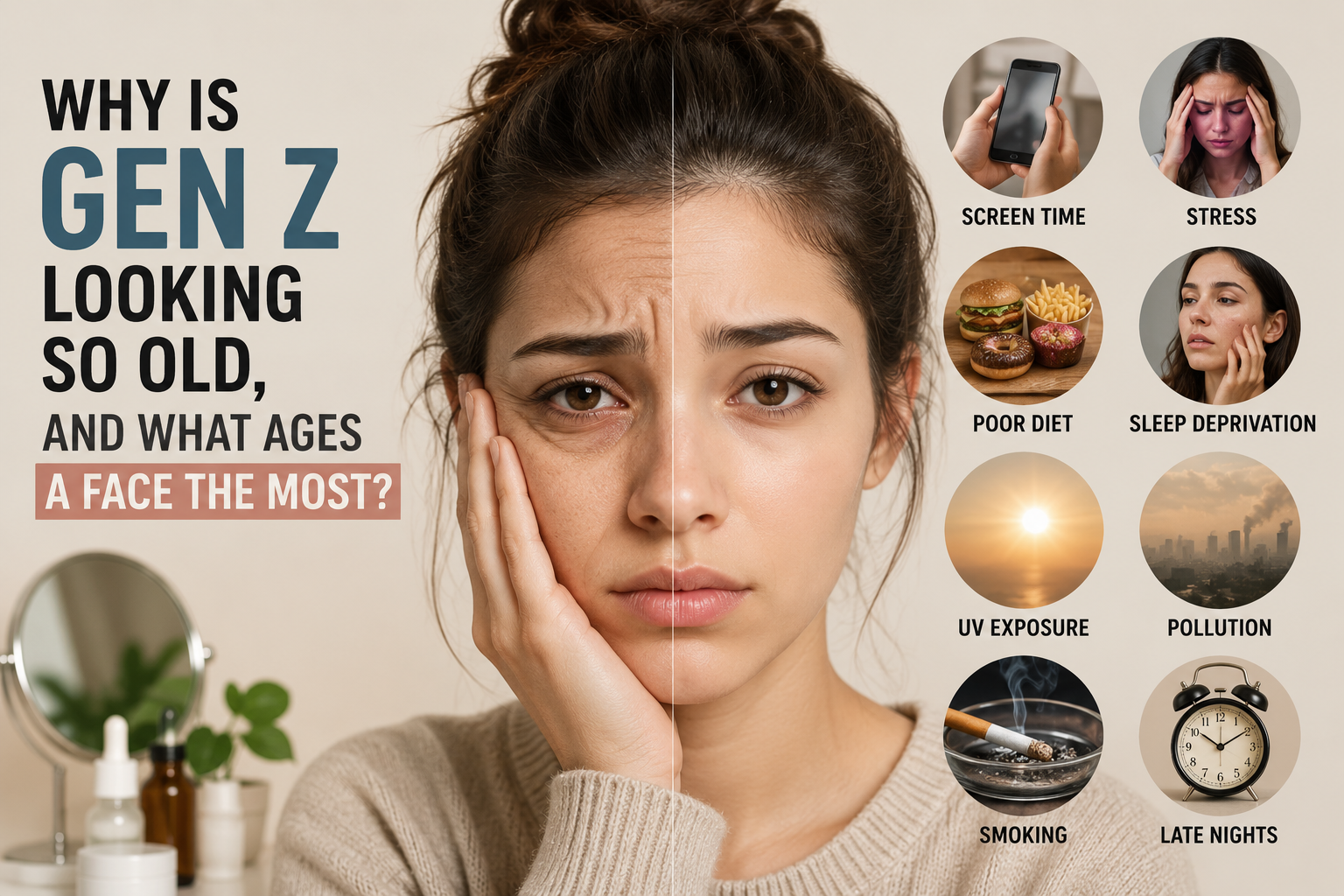
Genetics still plays a real role in how a face ages, but for a specific generation to look visibly older within just a few years points to behavior rather than biology, since genetics does not shift that quickly across a population. This is one of the most searched questions in the beauty space right now.
Stress, Screens, and Sleep Disruption
Cultural theorists point out that it is biologically implausible for an entire generation to age faster in a purely physical sense over such a short span. The likelier culprits are lifestyle factors: high stress, vaping, disrupted sleep cycles [Source: Jones, cited in Dazed, 2024]. Chronic stress raises cortisol, which breaks down collagen over time, while poor sleep directly affects skin tone and puffiness, covered in the lifestyle section below.
Overuse of Anti-Aging Actives at a Young Age
Many Gen Z skincare habits meant to prevent aging can work against that goal. Dermatologists report seeing children as young as eight or ten using retinol and anti-aging products designed for mature skin [Source: Qazi, 2026]. Overusing retinol before skin needs it can cause peeling, sensitivity, and a compromised barrier, and irritated skin often reads as older rather than younger [Source: Icecreamwala, cited in InStyle].
Preventative Botox Before There Is Anything to Prevent
Close to 75 percent of facial plastic surgeons reported a rise in patients under 30 requesting cosmetic injectables [Source: American Academy of Facial Plastic and Reconstructive Surgery, 2022]. Some dermatologists caution that early, frequent Botox can restrict natural expression, and in certain cases that may leave a face looking less animated than its actual age [Source: Jeffy, cited in USA Today, 2025]. Outcomes vary widely depending on dose, technique, and the individual provider, so this is not a universal effect.
What Ages a Face the Most, Ranked
- Cumulative unprotected sun exposure, generally considered the largest preventable factor
- Chronic sleep deprivation and disrupted circadian rhythm
- High, sustained stress and elevated cortisol
- Smoking and vaping, which reduce blood flow to skin
- Repeated harsh exfoliation or over-layered actives that damage the skin barrier
- Dehydration and poor nutrition
- Overcorrection through frequent cosmetic procedures at a young age
Genetics sets the baseline for how any individual face ages, including collagen loss and how visibly it shows. The items above are the behavioral factors layered on top of that baseline, and they are the ones within your control.
Grooming and Styling Tricks for a More Attractive Face
Grooming can influence how balanced and attractive facial features appear. Here, the focus is on how brows and hairstyles affect facial perception rather than on a step-by-step grooming routine
Eyebrow Shape Changes the Whole Face
Eyebrows frame the eyes, and the eyes carry the most emotional weight in a face, which is part of why brow shape shows up so consistently in attractiveness research. A well-groomed brow that follows your natural arch, rather than fighting it, opens up the eye area and creates the impression of balance even where mild asymmetry exists. Over-plucking or drawing on an unnatural shape tends to work against that. When in doubt, groom conservatively, and let a professional shape your arch once as a template you can maintain yourself.
Hair Framing and Attractiveness Perception
Hairstyles that suit your face shape do not just look tidy, they change which features draw attention first. A style that adds height or width in the right places can shift the balance a viewer perceives between your jaw, cheekbones, and forehead, which is one reason hairstyle changes are often the fastest way to affect how attractive a face reads to others.
How to Get a Cute Face Through Small Grooming Wins
If your goal is specifically how to get a cute face, the research on averageness and expression points toward softer, rounder features reading as more youthful and approachable: gently shaped rather than sharply angled brows, a natural lip tint that adds color without harsh lines, and hair with movement rather than flat, severe styling. Cute tends to read as soft and animated rather than sharp and static.
Consistent Grooming Beats Occasional Effort
A trimmed hairline, neat brows, and clean facial hair, if applicable, all signal care, and research on social perception shows that grooming and self-presentation influence attractiveness ratings somewhat independently of underlying bone structure.
How Can I Look Pretty Without Makeup?
You can look pretty without makeup by prioritizing skin health, brow shaping, and confident, relaxed expression, since these are the same underlying features makeup often mimics. Makeup does not create attractiveness from nothing, it enhances what is already there, which means the bare-faced version of some of those techniques can support the same effect, just more gradually.
How to Look Good Without Makeup: The Core Habits
- Exfoliate gently once or twice a week to keep skin smooth and light-reflective
- Keep your skin moisturized and use daily sunscreen for a healthy-looking, natural complexion.
- Keep brows shaped since they do much of the visual work eyeliner tries to fake
- Get enough sleep, since well-rested eyes need less concealer
- Smile more; a genuine expression outperforms contouring in most social contexts
How to Look Stunning Without Makeup for a Special Occasion
For a bigger moment, layer these habits: try a gentle at-home facial mask the night before, and sleep with your head slightly elevated to reduce next-morning puffiness. Some people use a chilled roller or a cold spoon under the eyes for temporary de-puffing; the effect is short-lived and evidence for any lasting benefit is limited, so treat it as a minor finishing touch rather than a core habit. None of this is makeup, but all of it supports the same features makeup targets.
How to Look Glamorous Without Makeup
Glamour without makeup comes from healthy hair, well-groomed brows, a plain lip balm, and posture. Standing and sitting with your chin level and shoulders back changes how light falls across your face and how confident you appear, and that combination reads as glamour without a single cosmetic product involved.
Lifestyle Habits That Keep Your Face Looking Younger Longer
Sleep, stress, and hydration all shape how young and attractive a face looks, and their effects on attractiveness perception specifically are worth a closer look, separate from the general skin routine covered in our companion guide.
Sleep Is Not Optional for a Youthful Face
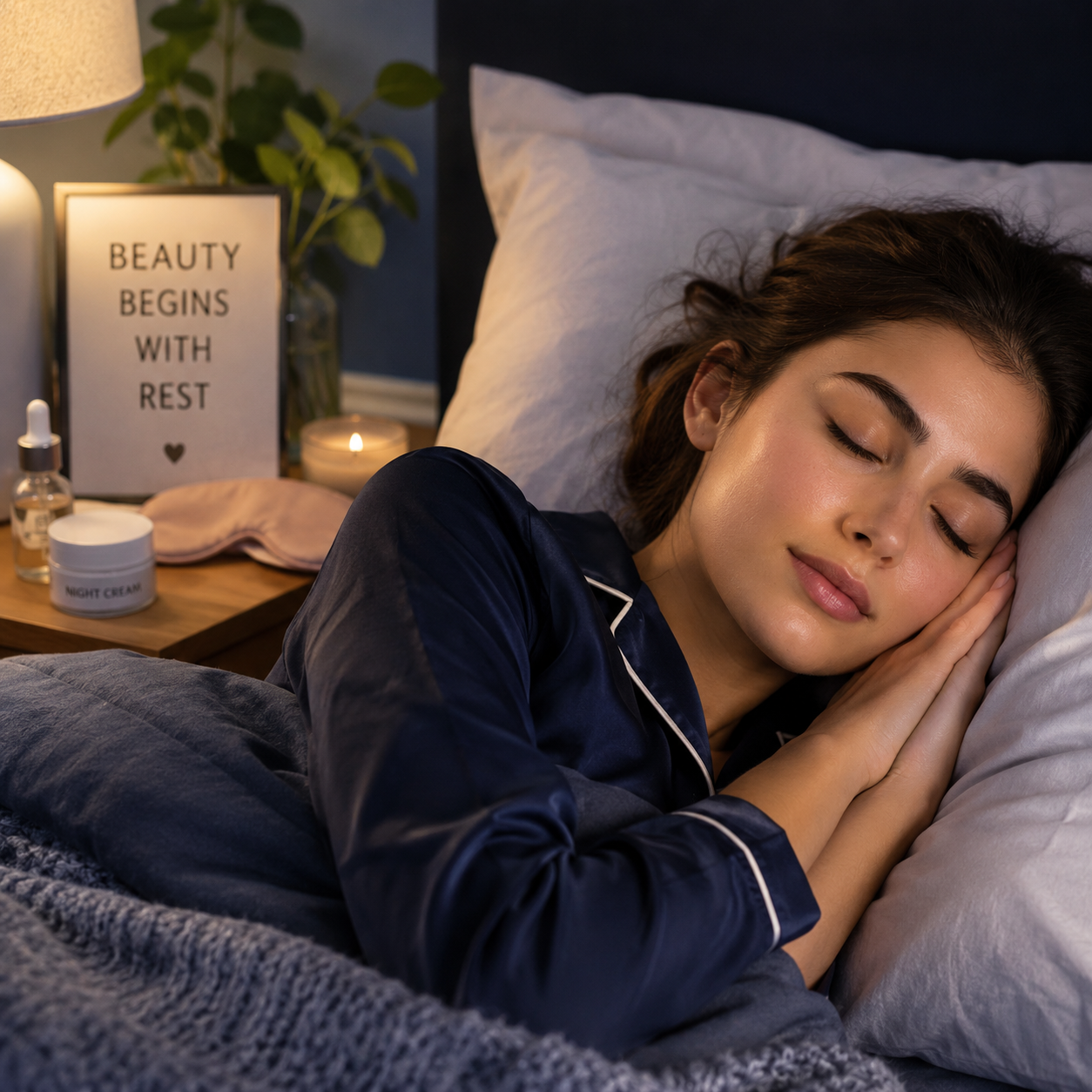
The phrase beauty sleep has real research behind it. In a well known study from the Karolinska Institute, sleep-deprived participants were consistently rated as less attractive, less healthy, and more tired than the same people after a normal night’s sleep [Source: Axelsson et al., cited in Sleep Education]. A separate 2024 review found that just two nights of restricted sleep, only three hours per night, measurably altered skin parameters and facial appearance in healthy adult women [Source: study cited in PubMed, 2024]. Researchers keep finding the same visible signs in sleep-deprived faces: more visible fine lines, reduced elasticity, redder and more swollen eyes, darker circles, and a paler overall tone from reduced blood flow.
Seven to nine hours a night is the general target, adjusted for individual needs. It costs nothing, and the research linking it specifically to attractiveness ratings, not just general skin health, is some of the strongest cited in this guide.
Why Is the Golden Age for a Woman Often Called the Late 20s to Mid 30s?
The term golden age for a woman, as used in beauty and dermatology circles, typically refers to the late twenties through mid thirties, a period when collagen production is still relatively strong, skin has matured past adolescent breakouts, and features have settled into their adult proportions. It is a cultural framing more than a strict biological cutoff, and how long any individual stays in that window depends heavily on genetics as well as habits.
Managing Stress for a Calmer, Clearer Face
Chronic stress raises cortisol, which breaks down collagen and can trigger breakouts and inflammation. Short daily walks, breathing exercises, and cutting screen time before bed support skin appearance alongside general wellbeing, though stress management works best as one part of a broader routine rather than a standalone fix.
How Can I Look More Attractive as a Guy?
Men can look more attractive naturally by maintaining a defined grooming routine, keeping skin clean and moisturized, choosing a hairstyle that suits face shape, and paying attention to posture and expression. Attractiveness research often centers on women, but skin health, grooming, and expression carry the same weight for men, even though the specific grooming choices differ.
How to Be a Better Looking Guy Through Grooming
- Keep facial hair trimmed and defined; even light stubble tends to read as more intentional than an unkempt beard
- Moisturize daily; men’s skin produces more oil on average but still needs hydration, especially after shaving
- Get regular haircuts on a schedule rather than waiting until hair looks obviously overgrown
- Trim eyebrows lightly to avoid a heavy, closed-off look without over-shaping them
Expression and Posture Carry Real Weight
The same posture and expression principles covered earlier in this guide apply directly to men: an open stance and a relaxed, genuine expression consistently shift attractiveness ratings in social psychology research, independent of facial structure. It is a free habit that compounds with everything else on this list.
Skincare for Men Does Not Need to Be Complicated
A cleanser, a moisturizer with SPF, and consistency covers most men’s needs. The same overuse warning from the Gen Z section applies here: more products is not automatically better, and irritation from over-exfoliating shows up on male skin just as easily as female skin.
FAQ: People Also Ask
What type of female face is most attractive?
There is no single most attractive face type. Research consistently points to healthy, even skin, balanced proportions, and expressive features as strong predictors, more than any specific shape or ethnicity of face. Averageness and femininity of features tend to rate highly across cultures [Source: Kleisner et al., 2024].
How can I tell if my face is pretty?
Attractiveness is subjective and heavily influenced by expression, grooming, and confidence, not just static structure. A more useful question is whether your skin is healthy, your grooming is intentional, and your expression is relaxed, since research shows those factors shift perception at least as much as bone structure does.
How can I look 20 years younger naturally?
There is no guaranteed way to look a fixed number of years younger, and results depend heavily on genetics, starting skin condition, and consistency. Daily SPF, consistent sleep, gentle skincare, and stress management are the habits most strongly linked to a more youthful appearance over time, since a large share of visible aging comes from cumulative sun exposure rather than age itself.
What clothes make you look younger?
Well-fitted clothing in colors that complement your skin tone tends to read as more youthful than baggy or outdated silhouettes. Brighter, cleaner colors near the face, like soft blues or warm neutrals, can brighten skin tone and draw attention upward toward the face.
What makes a lady look younger than her age?
Consistent sun protection, quality sleep, hydrated skin, and a simple skincare routine are commonly cited as leading factors, alongside posture, hairstyle, and genuine facial expression. Genetics still sets meaningful limits on how much any of this can shift someone’s apparent age.
Why do we look uglier as we age?
Attractiveness does not simply decline with age in any absolute sense; skin naturally loses collagen and elasticity over time, and cumulative sun damage becomes more visible across decades. Genetics determines much of that timeline, while sun protection and skin care started early can slow how quickly the visible signs show up.
Which generation looks the youngest?
There is no definitive research ranking generations by youthful appearance, and claims about any single generation looking younger are largely cultural rather than scientific. Lifestyle habits and genetics both matter more than birth year alone.
Which gen is older than Gen Z?
Millennials, born roughly between 1981 and 1996, are the generation directly older than Gen Z, who are generally defined as those born between 1997 and 2012.
Conclusion
Making your face look more attractive naturally comes down to three themes that run through this guide. Skin health, especially daily sun protection, is one of the highest leverage habits available, even though genetics still sets real limits on the outcome. Sleep and stress management shape how youthful and healthy a face looks, with research linking sleep specifically to attractiveness ratings, not just general skin condition. And grooming choices, brow shaping, hairstyle, and a relaxed, genuine expression, can visibly shift how attractive a face reads without changing anything structural at all.
None of this requires expensive treatments or drastic change, and none of it promises a fixed transformation. Start with one habit this week, whether that is daily SPF, an earlier bedtime, or a brow appointment, and give it a few weeks before judging the result. Small, sustained choices, paired with realistic expectations about what genetics and habits can each control, are what separate a natural, lasting improvement from a short-lived trend.
References & Further Reading
- American Academy of Dermatology. (2025). Survey: Half of Americans worry about skin aging, but many still skip sunscreen.
- Krutmann, J., et al. (2017). The role of UV radiation in skin aging. Clinical, Cosmetic and Investigational Dermatology.
- Kleisner, K., Tureček, P., Saribay, S. A., Pavlovič, O., Leongómez, J. D., Roberts, S. C., Havlíček, J., Ventová, J. V., Apostol, S., Akoko, R. M., & Varella, M. A. C. (2024). Distinctiveness and femininity, rather than symmetry and masculinity, affect facial attractiveness across the world.
- Eißing, F. L., Dirksen, D., Runte, C., & Jung, S. (2024). Limits in the Perception of Facial Symmetry: A Prospective Study. Journal of Personalized Medicine, 14(11), 1109.
- Sulikowski, D. (2024). Facial Characteristics: Symmetry. Chapter in facial perception literature.
- Botezatu, A. N., Cernei, E. R., & Zegan, G. (2024). Cross-Sectional Study on Self-Perception of Dento-Facial Asymmetry. Medicina, 60(8), 1291.
- Qazi, I. (2026). When Skincare Goes Too Far: A Dermatologist’s Guide for Gen Z.
- Axelsson, J., et al. Karolinska Institute study on sleep deprivation and perceived attractiveness, cited via Sleep Education.
- PubMed-indexed study (2024). The impact of sleep restriction on skin parameters and facial appearance of 24 women.
- American Academy of Facial Plastic and Reconstructive Surgery. (2022). Annual member survey on cosmetic procedure trends among patients under 30.
- PMC review (2024). Oxidative stress and age-related loss of skin elasticity.