Search “how to get a beautiful face naturally” and you’ll get the same fifteen items almost every time: drink water, wear sunscreen, sleep more. All true, all useful, and all incomplete, because a face isn’t just skin. It’s brows, hairline, jaw, smile, posture, and the expression you wear most often.
This guide covers the skin fundamentals first, since skipping them would be irresponsible. Then it moves into the grooming and lifestyle details most guides leave out: eyebrow shape, how your hair frames your face, oral health, posture, and jaw tension. You’ll get 15 specific habits and a realistic sense of how long each one takes to show.
What “A Beautiful Face” Actually Means
Most articles define facial beauty purely in skin terms: even tone, hydration, a healthy barrier. That’s accurate, but narrow. Bone structure and symmetry are set by genetics, and no skincare routine changes that.
What you can influence is everything layered on top of that structure: skin condition, grooming, posture, expression, and the general impression of care a face gives off. That’s the real scope of this guide, and it’s wider than a typical 15 skincare tips list.
Tips 1 to 4: Get the Skin Fundamentals Right
Skin is still the largest visible surface on your face, so start here before anything else on this list.
Hydrate Consistently
A 2018 systematic review in Skin Research and Technology found that an extra liter of water daily for 42 days measurably reduced dryness and roughness, with the biggest improvement in people who started out dehydrated [Source: Skin Research and Technology, Akdeniz et al., 2018]. Two liters a day is a reasonable general target, adjusted for climate and activity. Topical moisturizer works faster than water intake alone for visible hydration, so use both together rather than one instead of the other.
Cleanse and Moisturize, Keep It Simple
Twice daily cleansing with a gentle, sulfate free formula protects the skin barrier better than aggressive washing. Moisturizer isn’t optional, even for oily skin. Skip it regularly and oily skin often produces more oil to compensate.
Exfoliate Less Than You Think
Two to three times a week is the ceiling, not the floor. Daily exfoliation breaks the barrier down faster than skin can rebuild it, which shows up as redness and sensitivity, not glow.
Wear Sunscreen Every Day
The American Academy of Dermatology calls daily broad spectrum SPF 30+ the single most effective anti aging habit available [https://www.aad.org/media/stats-sunscreen]. Most of what people blame on aging, fine lines, uneven tone, loss of firmness, actually traces back to cumulative sun exposure rather than time itself. If your goal is to maintain a younger-looking appearance naturally, see our guide on how to look younger naturally without expensive treatments.
Tips 5 and 6: Diet and Sleep
Eat for Collagen Support
Vitamin C drives collagen synthesis. A 2026 study in the Journal of Investigative Dermatology linked higher dietary vitamin C intake, from kiwifruit, citrus, and bell peppers, to measurably firmer skin, with researchers pointing to roughly 250 milligrams daily as a useful target [https://www.jidonline.org/article/S0022-202X(25)03509-2/fulltext. Add omega 3 rich fish for barrier support and leafy greens for antioxidants, and go easy on refined sugar, which speeds up glycation, a process that stiffens collagen over time.
Prioritize Sleep
A study from the Skin Study Center at University Hospitals Case Medical Center compared women grouped as good and poor sleepers. Good sleepers showed measurably better skin barrier recovery after sun exposure and rated themselves as more attractive [Source: University Hospitals Case Medical Center, Skin Study Center, 2013]. Seven to nine hours on a consistent schedule does more for facial appearance than most topical products.
Grooming Details Most Guides Skip
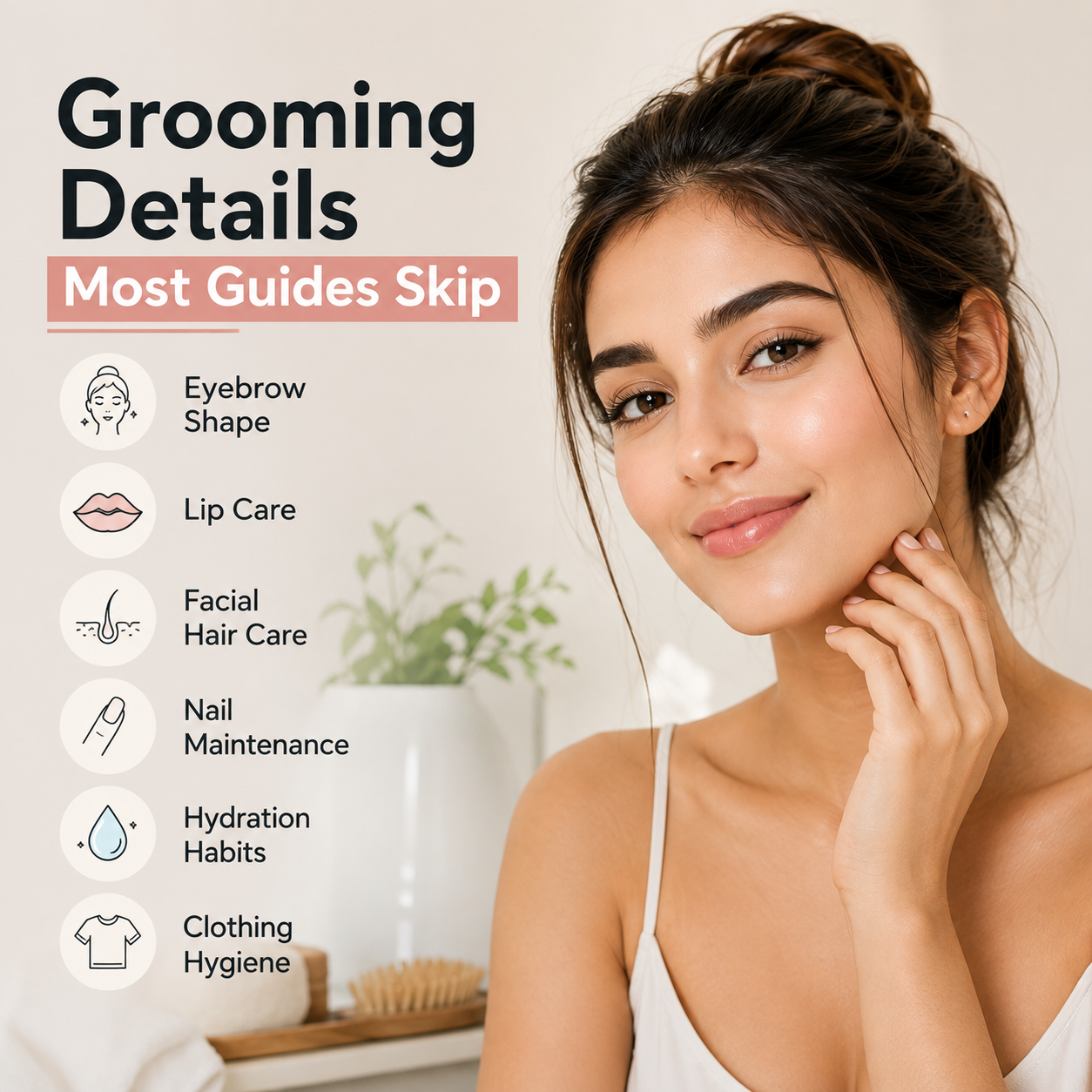
Grooming choices affect how a face reads at a glance, often more than skin condition does.
Tip 7: Shape Your Eyebrows With Intention
Eyebrows frame the eyes. Overplucked or completely untouched brows both pull attention away from the eyes rather than toward them. A shape that follows your natural brow bone, maintained with a monthly trim, is usually enough.
Tip 8: Let Your Hair Frame Your Face, Not Fight It
Hair is the frame around the picture. A cut or color that clashes with your face shape or hairline undercuts everything else you’re doing. This isn’t about chasing trends. It’s about picking proportions that suit your face and keeping your hairline and layers trimmed rather than growing out shapelessly.
Tip 9: Maintain Facial Hair and the Skin Under It
A defined beard or stubble line reads as more put together than an undefined one, regardless of length. For people who shave, exfoliating gently beforehand and using a sharp, clean blade prevents most of the razor burn and ingrown hairs that otherwise show up as redness.
Tip 10: Oral Health Is Part of Facial Beauty
A smile changes how a whole face reads in conversation and in photos. Basic oral hygiene, regular cleanings, and addressing bad breath or visible plaque buildup affect how comfortable you are smiling naturally. A guarded, closed mouth smile changes the impression a face gives more than most skincare choices do.
Tips 11 to 13: Posture, Tension, and Face Yoga
Posture Changes Your Jawline
Slouching shortens the visible distance between chin and chest, softening the jawline in photos and mirrors. Standing or sitting with a lifted chin and relaxed shoulders is a free, immediate change many people notice in their profile.
Notice Jaw Clenching
Jaw clenching is a common stress response, and it adds visible tension around the mouth and jaw over time. Noticing when your jaw is clenched, especially at your desk or before bed, and consciously relaxing it is a small habit with a cumulative effect on how relaxed your face looks.
Does Face Yoga Work?
The evidence is limited but real. A 2018 study in JAMA Dermatology had 27 women perform facial exercises daily for eight weeks, then every other day for twelve more. An independent dermatology panel rated their after photos as looking younger on average, with the clearest change in cheek fullness [Source: JAMA Dermatology, Alam et al., 2018]. That’s one small study with a notable dropout rate, not proof. Treat it as a low risk experiment, not a replacement for sunscreen or sleep.
Tips 14 and 15: Confidence and Expression
A Relaxed Expression Reads as More Approachable
Furrowed brows and a clenched jaw make a face look tense, regardless of skin quality. This connects directly to the posture and jaw tension habits above. A relaxed, unguarded expression, paired with a genuine smile, changes the impression a face gives more than most products can.
Build the Habits That Support It
Confidence isn’t cosmetic, but it visibly changes how a face is held and presented. Sleep, a balanced diet, and basic grooming all support a steadier, more relaxed default expression rather than a guarded one.
How Long Does This Actually Take?
Surface changes like hydration and reduced puffiness can show up within one to two weeks. Deeper changes, firmer texture, reduced pigmentation, generally take eight to twelve weeks, since skin cell turnover runs about 28 days in younger adults and slows with age. Grooming changes, a brow trim, a better haircut, are visible immediately. Posture and expression habits take a few weeks of conscious repetition before they become automatic.
One honest caveat: no natural method permanently changes bone structure, symmetry, or underlying skin tone. What these 15 habits can do is bring your face to its healthiest, most well kept baseline, which is a realistic goal worth having.
Frequently Asked Questions
How can I make my face beautiful naturally without spending money on products?
Hydration, sleep, sunscreen, and grooming basics like eyebrow shaping cost little or nothing and do more for facial appearance than most premium products. Consistency matters more than budget.
How can I get glowing skin naturally at home?
Drink enough water, cleanse and moisturize twice daily, and apply sunscreen every morning. Add gentle exfoliation two to three times weekly. The glow comes from a supported skin barrier, not a single product.
Does face yoga actually work for a more youthful face?
Limited evidence from a small 2018 study suggests modest improvement in cheek fullness after 20 weeks of daily exercises. Treat it as a low risk experiment, not a proven core habit.
How does posture affect how my face looks?
Slouching shortens the visible line between chin and neck, softening the jawline. Improving posture is a free, immediate change that affects how sharp your profile looks.
How long does it take to see natural improvement in my skin?
Surface hydration and glow can improve within one to two weeks. Deeper changes like firmer texture or reduced pigmentation typically take eight to twelve weeks, tied to the skin’s roughly 28 day renewal cycle.
Can grooming really make as much difference as skincare?
Eyebrow shape, a haircut suited to your face, and basic oral hygiene are all immediately visible in a way skincare improvements aren’t. Both matter, but grooming changes tend to show results faster.
Is permanent skin whitening possible naturally?
No natural method permanently changes the underlying skin tone. Natural care can fade uneven pigmentation and even out complexion through consistent sun protection and gentle exfoliation.
Conclusion
A genuinely beautiful face rests on more than a skincare routine. Skin hydration, sun protection, and diet build the foundation, but eyebrow shape, a haircut that fits your face, oral health, posture, and a relaxed expression are what most guides leave out, and they’re often what people notice first. Start with whichever of the 15 habits feels most doable this week, whether that’s a proper brow trim, standing up straighter, or getting to bed on time, and give it a few weeks before judging the result. A naturally beautiful face is less about chasing an ideal and more about consistently showing up as the healthiest, most well kept version of your own.
References and Further Reading
- American Academy of Dermatology. Sunscreen FAQs and How to Select a Sunscreen. 2026.
- University Hospitals Case Medical Center, Skin Study Center, Case Western Reserve University School of Medicine. Sleep Deprivation Linked to Aging Skin. 2013.
- Skin Research and Technology. Does Dietary Fluid Intake Affect Skin Hydration in Healthy Humans? A Systematic Literature Review. Akdeniz, M. et al. 2018.
- Journal of Investigative Dermatology. Dietary Vitamin C Intake and Skin Firmness Study. 2026.
- JAMA Dermatology. Association of Facial Exercise With the Appearance of Aging. Alam, M., Walter, A.J., Geisler, A. et al. 2018.