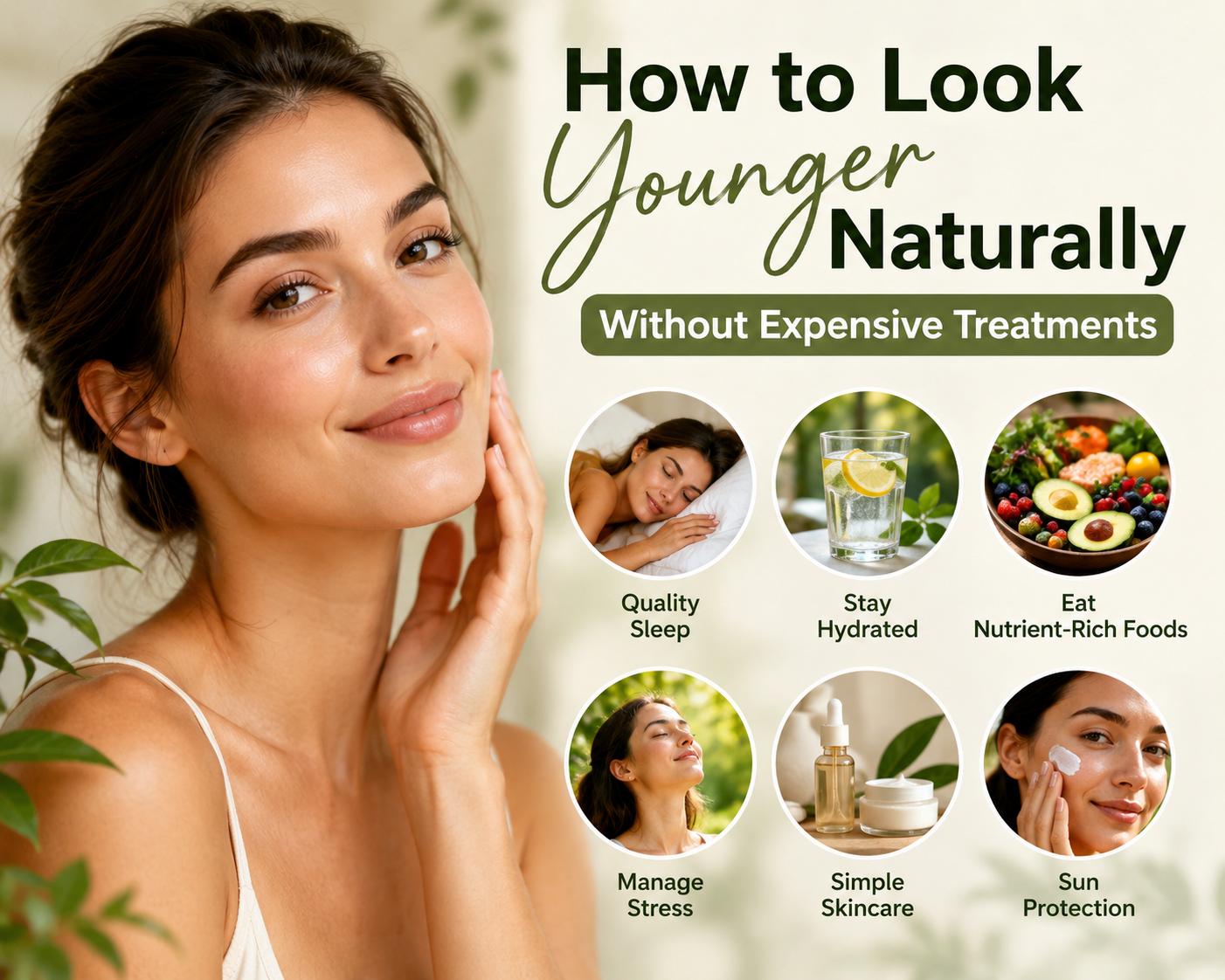
How to Look Younger Naturally Without Expensive Treatments
A large share of visible facial aging is linked to cumulative sun exposure, while genetics, hormones, and daily habits also influence how skin ages, not from the number of candles on your birthday cake [Source: Skin Cancer Foundation, 2024]. Genetics play a role. Daily habits play a bigger role.
This guide skips the vague advice you have probably already read somewhere else. It walks through what actually slows visible aging, backed by research, and what tends to speed it up.
For a broader guide to improving your overall natural appearance, see our guide on How to Get a Beautiful Face Naturally
In this guide you will learn how sun exposure, sleep, movement, nutrition, stress, and simple grooming choices each play a measurable role in how young your face looks. You will also learn which habits quietly age your skin faster than you might expect, and what you can realistically do about all of it starting today.
Table of Contents
- What Actually Makes a Face Look Younger
- Why Does Sun Protection Matter So Much for Youthful Skin
- How Sleep Quality Shapes a Younger-Looking Face
- Nutrition Habits That Support Skin Elasticity
- Can Exercise Really Slow Down Visible Aging
- Managing Stress for Long-Term Skin Health
- What Habits Quietly Age Your Face Faster
- Natural Habits vs Professional Treatments: An Honest Comparison
- Frequently Asked Questions
- Conclusion
1. What Actually Makes a Face Look Younger
A younger-looking face generally shows even skin tone, good hydration, minimal fine lines, and a rested appearance around the eyes. None of that is random. It comes down to how well the skin’s structure, collagen, and moisture barrier are functioning underneath the surface.
Collagen is the protein responsible for skin firmness and bounce, and it declines faster than most people assume. Research published in the American Journal of Pathology found that collagen secretion from skin cells drops by roughly thirty eight percent between the ages of twenty five and eighty [Source: Varani et al., American Journal of Pathology, 2006]. Because that decline happens gradually, small daily habits have real room to slow it, rather than needing to reverse decades of change all at once.
Genetics, hormones, and natural aging all play a role that no lifestyle habit can fully override. This guide will not promise you will look ten years younger. It is about giving your skin the best realistic conditions to age well.
2. Why Does Sun Protection Matter So Much for Youthful Skin
Sun exposure is the single biggest controllable factor behind visible facial aging. The Skin Cancer Foundation puts ultraviolet radiation behind up to eighty to ninety percent of the visible signs of skin aging, including wrinkles, uneven pigmentation, and loss of elasticity [Source: Skin Cancer Foundation, 2024]. Diet, sleep, and stress combined do not come close to that share.
What Broad Spectrum Protection Actually Means
Broad spectrum sunscreen blocks both UVA rays, which cause deep collagen damage, and UVB rays, which cause sunburn. The American Academy of Dermatology recommends a broad spectrum sunscreen with an SPF of thirty or higher, applied daily even on cloudy days [Source: American Academy of Dermatology, 2024].
Daily Habits That Reduce Photoaging
- Apply sunscreen to your face and neck every morning, rain or shine
- Reapply every two hours if you are outdoors for extended periods
- Wear a wide brimmed hat during peak midday hours
- Choose shade over direct sun exposure when you have the option
- Remember that car windows and office windows still let UVA rays through
A sunscreen you actually use every day beats an expensive one sitting in a drawer.
3. How Sleep Quality Shapes a Younger-Looking Face
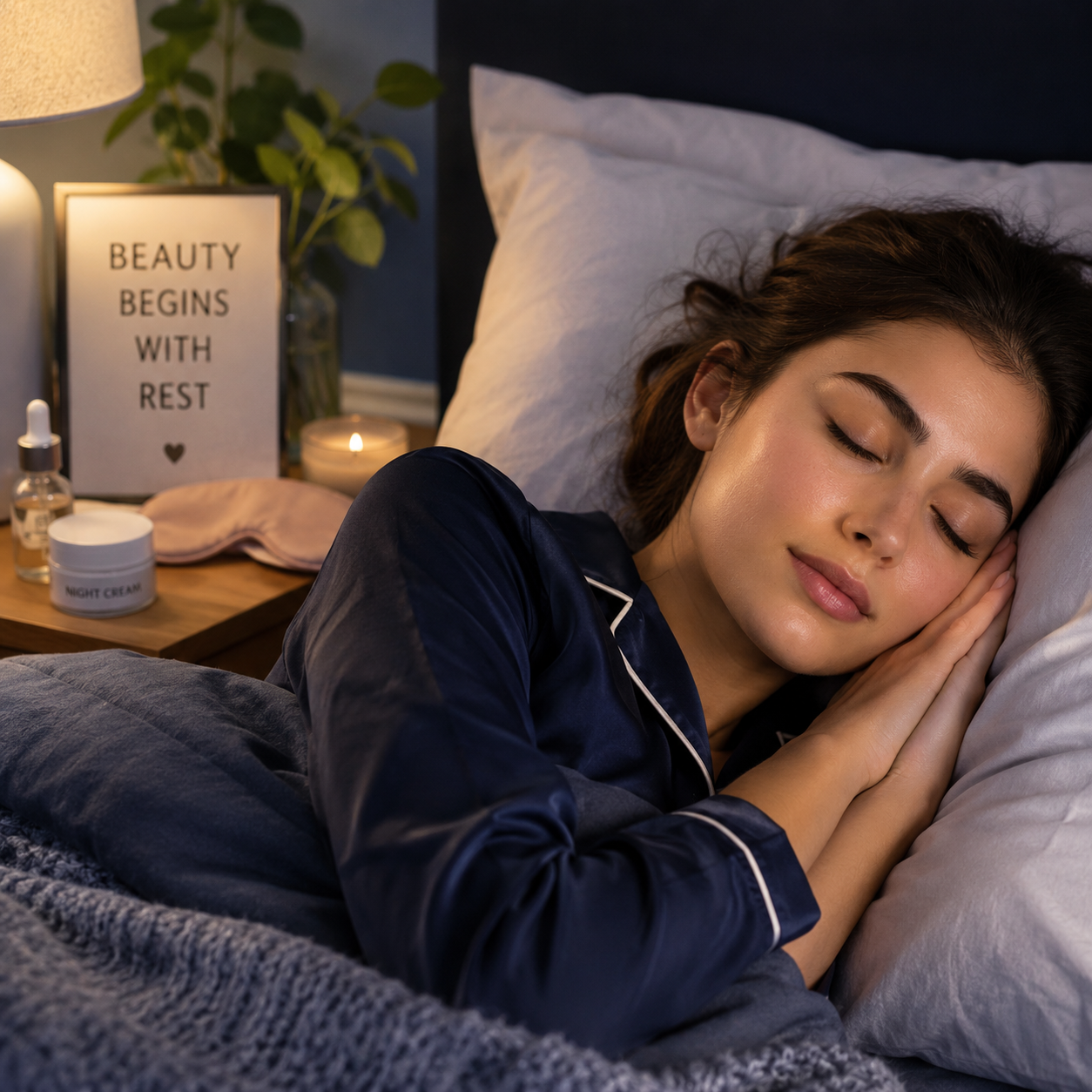
Poor sleep shows up on your face. A clinical trial conducted at University Hospitals Case Medical Center found that women classified as poor quality sleepers had significantly more fine lines, uneven pigmentation, and reduced skin elasticity than good quality sleepers [Source: Baron et al., University Hospitals Case Medical Center, 2013].
Good sleepers in the same study recovered from skin barrier damage about thirty percent faster than poor sleepers. Their skin repaired itself more efficiently overnight [Source: Baron et al., University Hospitals Case Medical Center, 2013].
How Much Sleep Do You Actually Need
Most adults need seven or more hours of sleep per night for healthy overall function, according to the Centers for Disease Control and Prevention [Source: CDC, 2024]. Falling short of that on a regular basis tends to show up as under eye darkness, puffiness, and a duller complexion.
Building Better Sleep Habits
- Keep a consistent bedtime and wake time, including weekends
- Limit screen exposure for at least thirty minutes before bed
- Keep your bedroom cool, dark, and quiet
- Avoid caffeine in the late afternoon and evening
4. Nutrition Habits That Support Skin Elasticity
No single food erases wrinkles. Any article claiming otherwise is not being honest. Consistent nutrition patterns still matter, because they supply the raw materials skin needs to maintain structure and hydration.
Nutrients Linked to Skin Function
| Nutrient Type | Common Sources | Role in Skin Health |
| Protein | Eggs, fish, legumes | Provides amino acids for collagen synthesis |
| Omega 3 fatty acids | Salmon, walnuts, flaxseed | Supports the skin’s moisture barrier |
| Vitamin C | Citrus, bell peppers | Involved in collagen formation |
| Antioxidant rich produce | Berries, leafy greens | May help offset oxidative stress on skin |
| Water | Direct hydration | Supports overall skin hydration and function |
Practical Nutrition Habits
- Build most meals around vegetables, lean protein, and healthy fats
- Include a source of omega three fatty acids a few times per week
- Stay hydrated throughout the day rather than in one large amount
- Limit ultra processed foods and added sugar, which are linked to inflammation
Nutrition works as a slow, cumulative support system, not a fast fix. Give it months, not days.
5. Can Exercise Really Slow Down Visible Aging
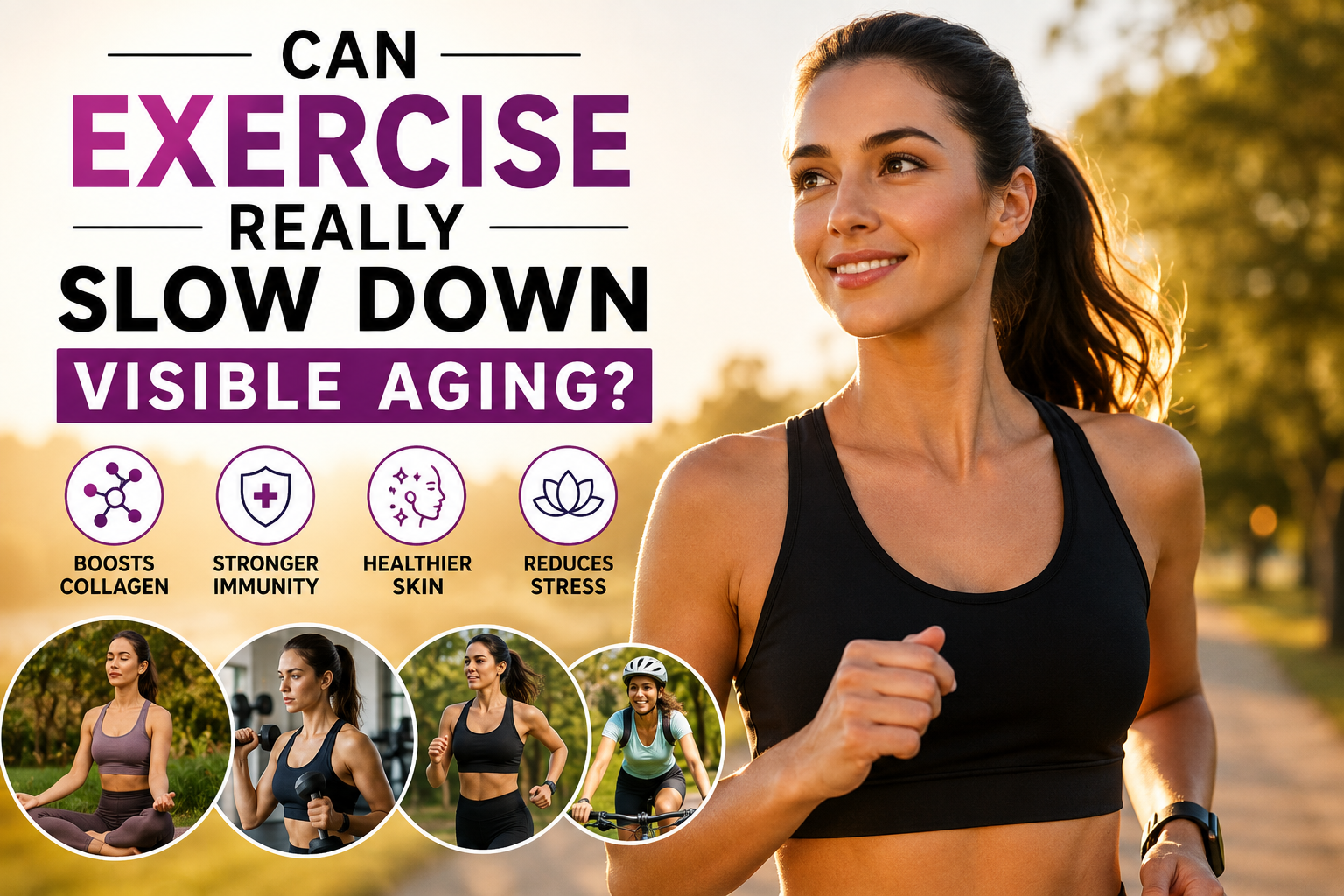
The science here is striking. A study of nearly six thousand adults from a national health survey found that the most physically active people had biological aging markers, measured through telomere length, that showed markers of biological aging that were associated with substantially younger-looking aging profiles than those seen in sedentary adults. of the same chronological age [Source: Tucker, Preventive Medicine, 2017].
The strongest benefits showed up among people doing the equivalent of thirty to forty minutes of vigorous activity most days of the week, though moderate activity still made a measurable difference [Source: Tucker, Preventive Medicine, 2017]. A separate study on strength training found that adults who trained regularly with weights had significantly longer telomeres, and therefore less biological aging, than those who did not, even after accounting for age, smoking, and body size [Source: Tucker and Bates, Biology, 2024].
A Realistic Weekly Movement Plan
- Walk briskly for at least thirty minutes most days
- Add two to three strength training sessions per week
- Include one or two sessions of higher intensity cardio if your fitness level allows it
- Prioritize consistency over intensity, especially when starting out
Exercise supports circulation, sleep quality, and stress levels. All three feed back into how healthy and rested your face looks.
6. Managing Stress for Long-Term Skin Health
Chronic stress does not carve wrinkles into your face overnight, but it sets the conditions for faster visible aging. Elevated stress is tied to disrupted sleep, increased inflammation, and coping behaviors like poor eating patterns, and each of those independently affects skin appearance.
Realistic Stress Management Habits
- Take short walks outdoors, especially in natural light
- Practice simple breathing exercises during high pressure moments
- Set boundaries around late night screen time and work emails
- Make time weekly for a hobby that has nothing to do with productivity
- Protect your sleep schedule even during stressful periods, since sleep is often the first thing sacrificed
Stress management protects the other habits on this list. Chronic stress erodes sleep, nutrition, and motivation to exercise all at once, so managing it pays off across the board.
7. What Habits Quietly Age Your Face Faster
Some daily habits accelerate visible aging more than people realize. This is not about fear. It is about knowing what the trade-offs actually are.
| Habit | Why It Accelerates Visible Aging |
| Unprotected sun exposure | Directly breaks down collagen and elastin over time [Source: Skin Cancer Foundation, 2024] |
| Smoking | Reduces collagen synthesis and increases the enzyme that breaks down elastic tissue [Source: Morita, Journal of Dermatological Science, 2007] |
| Chronic sleep deprivation | Slows skin barrier repair and increases visible fine lines [Source: Baron et al., University Hospitals Case Medical Center, 2013] |
| Excessive alcohol intake | Dehydrates skin and disrupts restorative sleep |
| Prolonged inactivity | Linked to poorer circulation and faster biological aging [Source: Tucker, Preventive Medicine, 2017] |
| Unmanaged chronic stress | Compounds sleep and lifestyle disruptions that show up on the skin |
| Over exfoliating or harsh skincare | Weakens the skin barrier, leading to irritation and a duller look |
One study using image analysis of facial skin replicas found that current smokers carried a meaningfully higher risk of moderate to severe facial wrinkling than nonsmokers of the same age group, even after adjusting for sun exposure [Source: Ku et al., Anatomy and Cell Biology, 2017]. Some habits simply cost more than others.
8. Natural Habits vs Professional Treatments: An Honest Comparison
Natural habits and professional treatments are not competing for the same outcome, and pretending otherwise does not help anyone.
| Factor | Natural Habits | Professional Treatments (e.g., Botox, Fillers, Laser) |
| Cost | Low to moderate, mostly time investment | Moderate to high, often recurring |
| Speed of visible results | Gradual, over weeks to months | Often immediate or within days |
| Targeted precision | Supports overall skin health broadly | Can target specific lines or volume loss precisely |
| Maintenance | Ongoing daily habits | Requires repeat sessions, typically every few months |
| Risk profile | Generally low risk when done sensibly | Requires a licensed provider and carries procedure specific risks |
| Best used for | Long term prevention and overall skin health | Addressing specific, established signs of aging |
Natural habits will not replicate what a dermatologist or cosmetic provider can do for an existing deep wrinkle or significant volume loss. What they can do is slow how quickly new signs of aging appear, and support the results of any professional treatment you do choose to pursue. A board certified dermatologist can help you weigh which option fits your goals and skin type.
Frequently Asked Questions
How can I look 10 years younger naturally?
There is no guaranteed way to look exactly ten years younger through lifestyle changes, so treat any claim promising a specific number with caution. Consistent sun protection, sleep, exercise, and nutrition can meaningfully improve how healthy and rested your skin looks after months of consistent practice.
What makes a face look younger?
A younger looking face generally has even skin tone, good hydration, minimal fine lines, and a rested appearance around the eyes. These traits trace back to collagen health, skin barrier function, and how well the body has been supported through sleep and sun protection.
How can I look younger without Botox?
Botox relaxes specific facial muscles that cause certain wrinkles, and natural habits cannot replicate that directly. Daily sunscreen, adequate sleep, hydration, and gentle skincare still support overall skin health and can slow the appearance of new fine lines.
What habits make you look older faster?
Unprotected sun exposure, smoking, chronic sleep deprivation, excessive alcohol use, and prolonged inactivity top the list of habits linked to faster visible aging in dermatology and public health research.
Can exercise make you look younger?
Yes, indirectly. Highly active adults have been associated with healthier biological aging markers than sedentary adults of the same age, although this does not mean exercise literally makes someone look nine years younger.
Does drinking more water reduce wrinkles?
Adequate hydration supports normal skin function and can soften the look of dryness, but water alone will not remove existing wrinkles. It works best as one part of a broader set of consistent habits.
What ages your face the most?
Cumulative sun exposure is the single largest controllable factor in visible facial aging, responsible for up to eighty to ninety percent of visible signs according to dermatology research, with smoking and chronic sleep deprivation close behind.
Is it too late to start anti-aging habits in your 40s or 50s?
No. Some existing signs of aging will not reverse through lifestyle changes alone, but sun protection, sleep, exercise, and nutrition can still slow the rate of new visible aging at any age, since collagen decline and skin repair processes stay active throughout life.
Conclusion
Looking younger naturally comes down to three consistent priorities: protecting your skin from cumulative sun exposure, giving your body enough quality sleep to repair itself, and supporting your overall health through movement, nutrition, and stress management. Natural habits will not replace what a professional treatment can achieve for an existing deep wrinkle, and saying so plainly builds more trust than a false promise would.
What these habits can do is slow how quickly new signs of aging appear and help you look like the healthiest, most rested version of yourself. Start with the two highest impact habits covered here, daily sunscreen and consistent sleep, then layer in the rest. Small, sustained changes compound in ways quick fixes cannot.
References & Further Reading
- Skin Cancer Foundation. (2024). Effects of Ultraviolet Radiation on Visible Skin Aging.
- American Academy of Dermatology. (2024). Sunscreen FAQs and SPF Recommendations.
- Varani, J., et al. (2006). Decreased Collagen Production in Chronologically Aged Skin: Roles of Age-Dependent Alteration in Fibroblast Function and Defective Mechanical Stimulation. American Journal of Pathology.
- Baron, E., et al. (2013). Effects of Sleep Quality on Skin Aging and Function. University Hospitals Case Medical Center, presented at the International Investigative Dermatology Meeting.
- Centers for Disease Control and Prevention. (2024). Recommended Sleep Duration for Adults.
- Tucker, L. A. (2017). Physical Activity and Telomere Length in U.S. Men and Women: An NHANES Investigation. Preventive Medicine.
- Tucker, L. A., & Bates, C. J. (2024). Telomere Length and Biological Aging: The Role of Strength Training in 4814 US Men and Women. Biology.
- Morita, A. (2007). Tobacco Smoke Causes Premature Skin Aging. Journal of Dermatological Science.
- Ku, J. K., et al. (2017). Cigarette Smoking Associated with Premature Facial Wrinkling: Image Analysis of Facial Skin Replicas. Anatomy and Cell Biology.