
Natural Glowing Skin at Home: The Complete Guide
Nearly 40 percent of adults say uneven skin tone is their top skincare concern, according to a 2023 consumer survey from the American Academy of Dermatology [Source: American Academy of Dermatology, 2023]. Typing “natural glowing skin at home” into a search bar tonight puts you in good company, and you do not need an expensive clinic visit to see real results.
Here is what this guide covers: the science backed ingredients that brighten skin, a full at home facial you can do this weekend, a 7 day glowing skin challenge, the foods that support radiant skin from the inside, and the truth about skin bleaching products so you can steer clear of the ones that cause harm. Every tip below comes from dermatology research rather than internet myths.

Table of Contents
- What Is Natural Glowing Skin, and Why Does It Matter?
- How Can I Glow My Skin Naturally at Home?
- The Ultimate At Home Facial Steps for Radiant Skin
- Natural Skin Brightening Remedies That Actually Work
- Is Skin Bleaching or Whitening Safe? What You Need to Know
- The 7 Day Glowing Skin Challenge
- What Foods Help Your Skin Glow Naturally?
- Common Mistakes That Dull Your Skin
- FAQ
- Conclusion
- References and Further Reading
1. What Is Natural Glowing Skin, and Why Does It Matter?
Natural glowing skin is skin that reflects light evenly because it is well hydrated, exfoliated, and free of inflammation. This has nothing to do with changing your natural skin color. Dermatologists call this quality “radiance,” and it comes from a smooth surface texture paired with healthy blood flow underneath the skin [Source: Journal of Cosmetic Dermatology, 2022].
Skin is the body’s largest organ, and it acts as a visible signal of overall health, which is part of why glow matters so much to people. When your skin barrier is damaged or dehydrated, light scatters unevenly across the surface and the skin looks dull instead of luminous. Restoring that barrier is the real driver behind every glowing skin routine, whether it happens in a spa or a bathroom sink.
Why the Skin Barrier Comes First
Your skin barrier, known as the stratum corneum, is a thin outer layer that locks in moisture and blocks irritants. A 2021 review in the International Journal of Molecular Sciences found that a compromised barrier is directly linked to dullness, sensitivity, and uneven tone [Source: International Journal of Molecular Sciences, 2021]. Before reaching for any brightening product, repair this barrier first with gentle cleansing and consistent moisture.
2. How Can I Glow My Skin Naturally at Home?
Four habits do most of the work: gentle cleansing, regular exfoliation, deep hydration, and daily sun protection. These form the foundation of nearly every effective skincare routine, and they cost far less than salon treatments.
Cleanse Without Stripping Your Skin
Rinse with lukewarm water and a mild, fragrance free cleanser twice a day. Hot water and harsh soaps strip natural oils, and the skin responds by overproducing oil, which leaves it looking greasy instead of glowing.
Exfoliate to Reveal Fresh Skin
Dead skin cells build up on the surface and block light reflection. That buildup is a major reason skin looks tired. A soft washcloth or a mild scrub with fine sugar or oatmeal, used two to three times a week, clears it safely.
Hydrate From the Outside In
Apply a moisturizer while skin is still damp to seal in water. Ingredients like hyaluronic acid and glycerin pull moisture into the skin and are considered gold standard humectants by dermatologists [Source: Journal of Clinical and Aesthetic Dermatology, 2017].
Protect With Sunscreen Every Single Day
Sun exposure drives premature dullness, dark spots, and uneven tone more than anything else. The Skin Cancer Foundation reports that up to 90 percent of visible skin aging comes from UV exposure [Source: Skin Cancer Foundation, 2024]. A broad spectrum SPF 30 or higher, applied every morning, is the strongest natural glow booster available.
3. The Ultimate At Home Facial Steps for Radiant Skin
A proper at home facial follows five ordered steps: cleanse, steam, exfoliate, mask, and moisturize. A weekly facial at home delivers the same deep clean and circulation boost as a professional treatment, minus the price tag.
Step by Step Home Facial Steps
- Double cleanse. Start with an oil based cleanser to lift makeup and sunscreen, then follow with a gentle foaming cleanser.
- Steam your face. Lean over a bowl of warm water for five minutes to open pores and soften debris. Keep your face at least twelve inches away to avoid burns.
- Exfoliate gently. Use a soft scrub in small circular motions for sixty seconds, then rinse with cool water.
- Apply a mask suited to your skin. Clay masks work well for oily skin, while honey or oat based masks suit dry or sensitive skin.
- Lock in moisture. Finish with a hydrating serum, moisturizer, and, if it is daytime, sunscreen.
How Often Should You Do a DIY Facial?
Once a week is the sweet spot for most skin types. Doing a facial at home more than twice weekly over exfoliates the skin, weakens the barrier covered earlier, and trades radiance for redness.
4. Natural Skin Brightening Remedies That Actually Work
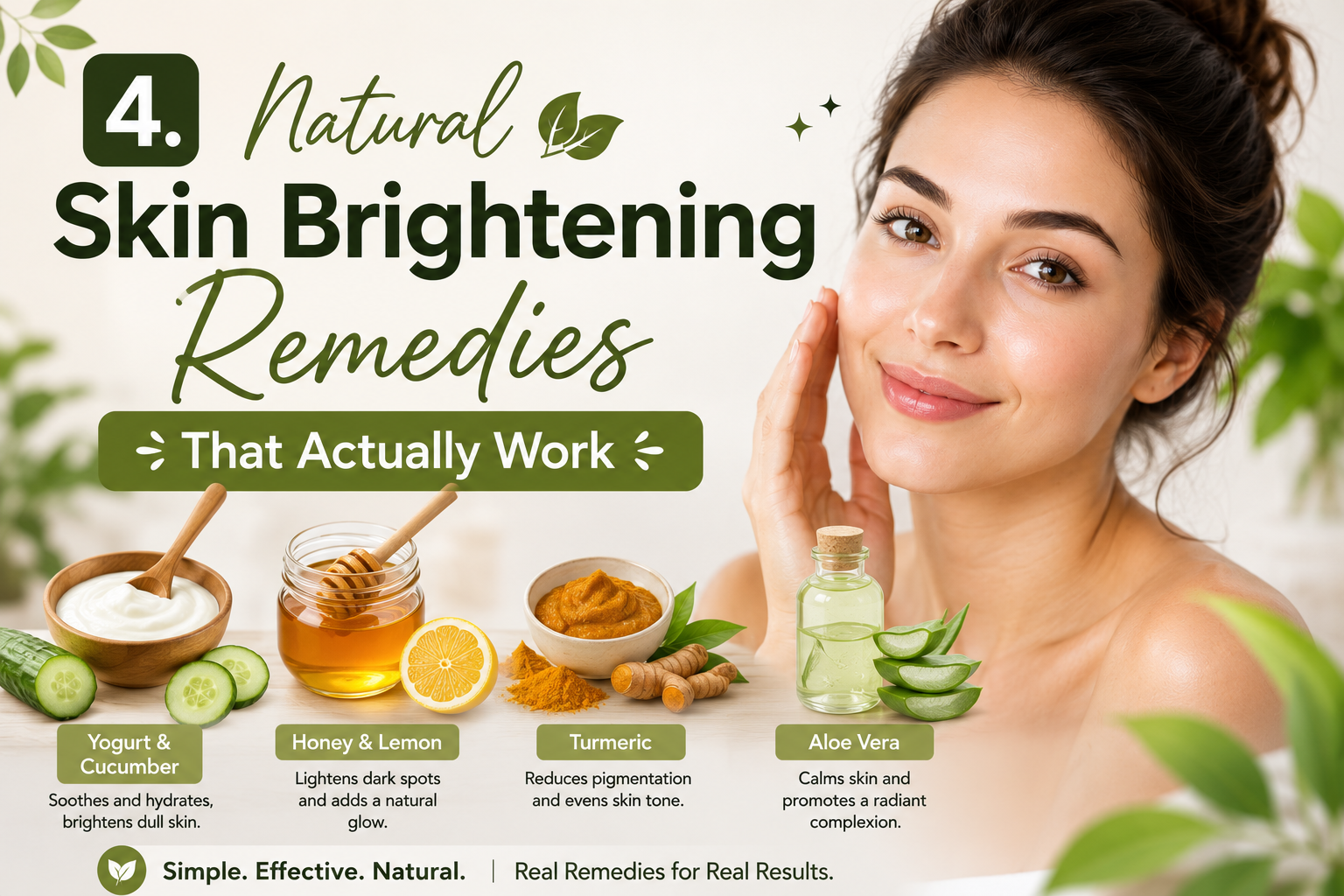
Several kitchen ingredients have real, published evidence behind their brightening effects, though the results build slowly rather than overnight. Natural skin whitening remedies at home should aim at evening out tone, not changing your baseline skin color. That baseline is genetically determined, and no topical product can permanently alter it.
Honey and Its Antioxidant Effect
Raw honey contains natural humectants and antioxidants. A study published in the Journal of Cosmetic Dermatology found honey masks improved skin hydration and reduced surface roughness after four weeks of consistent use [Source: Journal of Cosmetic Dermatology, 2020]. Apply a thin layer for fifteen minutes, then rinse.
Turmeric for Calming Redness
Curcumin, the active compound in turmeric, has documented anti inflammatory properties [Source: National Center for Complementary and Integrative Health, 2023]. Mix a small pinch with plain yogurt for a ten minute mask. Use sparingly, since turmeric can temporarily stain lighter skin tones.
Vitamin C for Even Tone
Topical vitamin C ranks among the most researched brightening ingredients. Clinical data shows it inhibits the enzyme tyrosinase, which slows excess pigment production, and tone improves within eight to twelve weeks of daily use [Source: Journal of Clinical and Aesthetic Dermatology, 2017].
Niacinamide for Barrier Repair and Tone
A twelve week double blind clinical trial found that niacinamide, a form of vitamin B3, reduced hyperpigmented spots and improved skin elasticity at just a 5 percent concentration [Source: Bissett et al., Dermatologic Surgery, 2005]. It suits nearly every skin type and pairs safely with vitamin C.
Comparison Table: Natural Brightening Ingredients
| Ingredient | Main Benefit | Time to See Results | Best For |
| Honey | Hydration, mild antibacterial | 2 to 4 weeks | Dry, sensitive skin |
| Turmeric | Reduces redness and inflammation | 3 to 6 weeks | Uneven, irritated skin |
| Vitamin C serum | Evens tone, boosts collagen | 8 to 12 weeks | All skin types, dull skin |
| Niacinamide | Repairs barrier, fades spots | 8 to 12 weeks | Oily, acne prone, sensitive skin |
| Aloe vera | Soothes and hydrates | 1 to 2 weeks | Sunburned or irritated skin |
5. Is Skin Bleaching or Whitening Safe? What You Need to Know
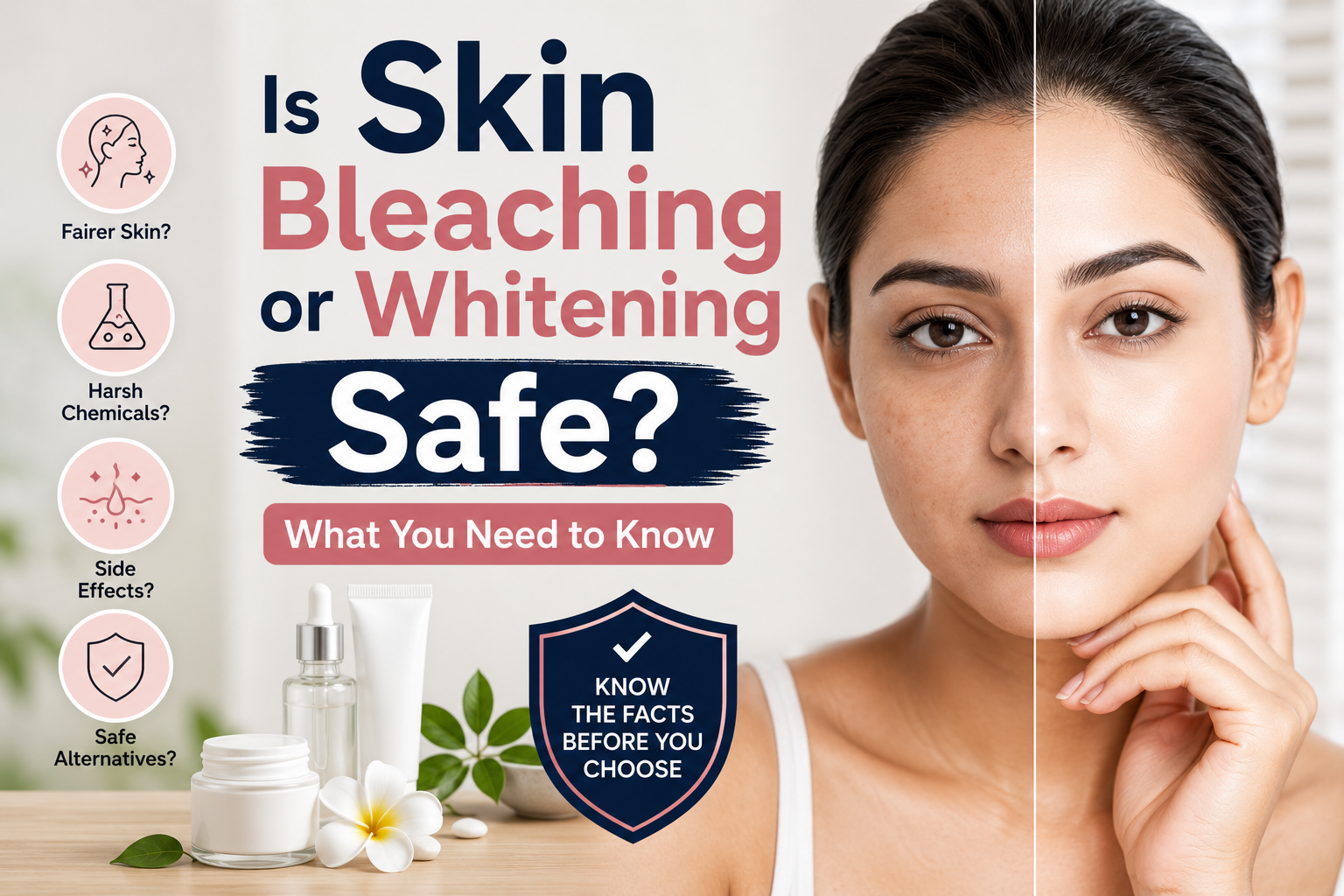
No. Skin bleaching products that contain mercury or unregulated hydroquinone are not safe, and the FDA advises against using them entirely. This section matters most in this guide, because many products marketed for skin whitening or permanent skin lightening contain ingredients banned in the United States.
The Mercury and Hydroquinone Warning
In 2025, the New York City Department of Health tested twenty two over the counter skin lightening creams and found mercury levels up to 30,000 times the legal cosmetic limit, several sourced from Pakistan and Thailand [Source: NYC Department of Health and Mental Hygiene, 2025]. The FDA has separately confirmed that no over the counter skin lightening product is currently approved as safe and effective, and hydroquinone products sold without a prescription violate federal law [Source: U.S. Food and Drug Administration, 2022]. Reported side effects include facial swelling, rashes, and a permanent gray blue skin discoloration called ochronosis [Source: U.S. Food and Drug Administration, 2022].
Why Permanent Skin Whitening Is a Myth
Genetics sets your baseline skin tone through melanin production. No cream, natural or synthetic, permanently changes that baseline. Products can fade dark spots, calm inflammation, and even out patchy tone, which is why this guide focuses on brightening and evening skin rather than whitening it. Stubborn dark spots or melasma call for a board certified dermatologist, who can prescribe regulated treatments monitored for safety.
6. The 7 Day Glowing Skin Challenge
The 7 day glowing skin challenge is a short, structured plan that pairs daily habits with one deeper treatment to jumpstart visible radiance within a week. Consistency drives the results here, not intensity.
- Day 1: Deep cleanse and apply a hydrating sheet mask. Drink at least eight glasses of water.
- Day 2: Gentle exfoliation followed by a niacinamide serum. Add omega 3 rich foods like walnuts to your meals.
- Day 3: Rest day for actives. Focus on a thick moisturizer and seven to eight hours of sleep.
- Day 4: Honey mask for fifteen minutes. Swap one sugary snack for berries or citrus fruit.
- Day 5: Vitamin C serum in the morning, SPF layered on top. Take a short walk to boost circulation.
- Day 6: Full DIY facial using the five steps from section three.
- Day 7: Light exfoliation, hydrating mask, and a review of how your skin feels compared to Day 1.
By the end of the week, most people notice smoother texture and a healthier glow. The skin’s natural renewal cycle starts responding to consistent hydration and gentle exfoliation almost right away, though deeper pigment changes still take longer.
7. What Foods Help Your Skin Glow Naturally?
Foods rich in antioxidants, healthy fats, and water content support glowing skin from within by reducing oxidative stress and maintaining hydration at a cellular level. Diet will not replace a topical routine, but it strengthens the results.
Antioxidant Rich Fruits and Vegetables
Berries, citrus fruits, and leafy greens are high in vitamin C and polyphenols. A 2015 study in Nutrients linked higher antioxidant intake to improved skin elasticity and reduced signs of photodamage over a twelve week period [Source: Nutrients, 2015].
Healthy Fats for Skin Barrier Support
Fatty fish, walnuts, and flaxseeds supply omega 3 fatty acids, which maintain the lipid barrier covered earlier in this guide. That barrier keeps moisture locked in, and locked in moisture is what produces a dewy look.
Hydration and Skin Elasticity
Drinking adequate water supports skin turgor and elasticity, according to research published in Clinical, Cosmetic and Investigational Dermatology [Source: Clinical, Cosmetic and Investigational Dermatology, 2018]. Aim for consistent daily intake rather than a single large amount before an event.
8. Common Mistakes That Dull Your Skin
Even a solid routine can fail if a few habits work against it. Fixing these often shows faster results than adding new products.
- Skipping sunscreen on cloudy days, since up to 80 percent of UV rays still penetrate cloud cover.
- Over exfoliating, which damages the barrier and causes rebound dullness and irritation.
- Sleeping in makeup, which clogs pores and blocks overnight skin repair.
- Using very hot water, which strips natural oils and worsens dryness.
- Ignoring diet and sleep. Both directly affect skin renewal and inflammation levels.
- Trying too many new products at once. That makes it impossible to tell what is working or what is causing irritation.
FAQ
How can I make my skin glow naturally?
Cleanse gently, exfoliate two to three times weekly, apply a hydrating serum, and use sunscreen daily. These four habits repair the skin barrier, the foundation of natural radiance, and results typically show up within two to four weeks.
How to make your face glow naturally at home?
Stick to a consistent routine of cleansing, moisturizing, and weekly exfoliation, and add a hydrating mask once a week. A morning vitamin C serum further supports even tone and visible glow over time.
How to glow in 7 days naturally?
Follow a structured plan that alternates gentle exfoliation with hydrating masks, while prioritizing sleep, water intake, and daily SPF. Section six lays out the full 7 day glowing skin challenge with a daily breakdown.
How to glow skin in 5 minutes?
A quick facial massage with a cold jade roller or ice cube boosts circulation instantly, and a hydrating mist adds immediate surface radiance. These effects are short lived, so a full routine still matters for lasting change.
Is it safe to lighten skin naturally at home?
Natural ingredients like vitamin C and niacinamide can safely even out tone and fade dark spots, but no product permanently changes your baseline skin color. Avoid anything containing mercury or unregulated hydroquinone, since both carry serious health risks.
What is the best home remedy for face whitening?
No remedy safely whitens skin permanently, since tone is genetically determined. Vitamin C and niacinamide are the safest, evidence backed way to brighten and even out existing discoloration.
How often should I do a facial at home?
Once a week works best for most skin types. More frequent facials tend to over exfoliate the skin and trigger irritation instead of glow.
What foods make skin glow naturally?
Berries, citrus fruits, leafy greens, fatty fish, and walnuts support skin health through antioxidants and healthy fats. Paired with adequate water intake, these foods strengthen the skin barrier and support a natural glow from within.
Conclusion
Natural glowing skin at home comes down to three habits: protect your skin barrier, use evidence backed brightening ingredients like vitamin C and niacinamide, and support your skin from the inside with hydration and a nutrient rich diet. Skip products with mercury or unregulated hydroquinone. The health risks documented by the FDA and NYC Health Department far outweigh any short term benefit.
Start with the 7 day glowing skin challenge in this guide, stay consistent, and give your skin the six to twelve weeks that clinical studies show most brightening ingredients need for full results. Real glow comes from steady care, not shortcuts.
References and Further Reading
- American Academy of Dermatology. (2023). Consumer survey on skincare concerns.
- Journal of Cosmetic Dermatology. (2022). Clinical characteristics of facial skin radiance.
- International Journal of Molecular Sciences. (2021). Skin barrier function and dermatological disease.
- Journal of Clinical and Aesthetic Dermatology. (2017). Humectants and topical vitamin C in skin brightening.
- Skin Cancer Foundation. (2024). UV exposure and photoaging statistics.
- Journal of Cosmetic Dermatology. (2020). Honey based topical formulations and skin hydration.
- National Center for Complementary and Integrative Health. (2023). Turmeric fact sheet.
- Bissett, D. L., et al. Dermatologic Surgery. (2005). Niacinamide and aging facial skin appearance.
- NYC Department of Health and Mental Hygiene. (2025). Health Advisory: Elevated concentrations of mercury in skin lightening creams.
- U.S. Food and Drug Administration. (2022). FDA works to protect consumers from potentially harmful OTC skin lightening products.
- Nutrients. (2015). Dietary antioxidants and skin photoaging.
- Clinical, Cosmetic and Investigational Dermatology. (2018). Water intake and skin physiology.