
Natural Beauty Tips 2026: The Ultimate Guide to Glowing Skin, Hair, and Face
Did you know the natural beauty market is expected to grow at a rate of nearly 9% per year, reaching USD 31.4 billion by 2024. By 2030 it will reach USD 52.22 billion. Natural beauty has become more than just a trend. In 2026, many people are looking for simpler and more mindful ways to care for their skin, hair, and overall appearance. Instead of following complicated routines or using too many products, the focus is shifting toward healthy habits, gentle ingredients, good nutrition, hydration, and consistent skincare.
This guide will give you all the information you need to achieve glowing skin, stronger hair or a clearer complexion, without having to buy expensive serums. This guide will teach you the best natural beauty tricks for your skin, hair and overall health. It also includes a daily routine and ingredient comparisons. You’ll get expert advice and answers to questions that most beauty blogs ignore.
Table of Contents
- Why Natural Beauty Is the Smarter Choice in 2026
- Natural Beauty Tips for Glowing Skin That Actually Work
- Natural Beauty Tips for Face: Clearer, Brighter Complexion
- Natural Beauty Tips for Hair: Strength, Shine, and Growth
- Natural Beauty Tips for Teenagers: Simple Routines That Build Good Habits
- Natural Beauty Tips for Women: A Complete Daily Routine
- Nutrition and Hydration: The Foundation of Natural Beauty
- Ingredient Comparison Table: Natural vs Synthetic Skincare
- FAQ: People Also Ask
1. Why Natural Beauty Is the Smarter Choice in 2026
Natural beauty is a way to enhance your appearance by using natural ingredients, lifestyle habits that are proven, and formulations with minimal processing, rather than synthetic chemicals. This is not an attack on science. It’s a better application.
A 2026 report from NATRUE states that consumers are not just buying products today to solve problems. They build routines around their values of health, sustainability and emotional well-being. A recent survey revealed that 46.6% respondents built their self-care rituals to make them feel good, and not to just look good. This shift in mindset is changing the beauty industry.
Natural beauty does not mean avoiding products. It’s about building habits and choosing the right ingredients. Women who drink enough water, eat antioxidant-rich foods, sleep seven to nine hours and use a gentle cleanser are more likely to be successful than those who layer fifteen products.
The Clean Beauty vs Natural Beauty Distinction You Need to Know
Both terms are used interchangeably but they do not mean the same thing.
The focus of clean beauty is on transparency and ingredient safety. It can include synthetic ingredients which are proven scientifically to be safe. Natural beauty is based on minimally-processed or plant-based ingredients that are sourced directly from the natural world. Organic beauty is an extension of natural beauty, where the ingredients are grown without pesticides according to certified farming standards.
It is important to understand the difference between these two terms, so that you are not misled by marketers. Natural does not mean that a product is safe or effective. Look for products that are certified and carefully read the labels.
The 2026 Consumer Shift: What Is Driving It
A 2026 industry study by Bio Eco Actual found that consumers are more attracted to brands who communicate honestly about their ingredients and production processes. Sustainability, transparency and ethical production have become standard features. These are now expected standards.
A 2025 report also found that 72% consumers prefer eco-friendly products and 60% would pay more to have sustainable packaging. These figures reflect a fundamental shift in the way American women shop for beauty products.
2. Natural Beauty Tips for Glowing Skin That Actually Work
Glowing skin does not happen by chance. Consistent habits that promote your skin’s renewal process are the key to glowing skin. Skin replaces itself approximately every 28 days. This means that the choices you made today will show up about one month later.
The best natural beauty tips to get glowing skin are listed below, categorized by type, and backed up with science.
The most important habits for naturally glowing skin include:
- Staying properly hydrated throughout the day
- Applying SPF 30 or higher every morning
- Using a gentle cleanser and moisturizer
- Exfoliating gently and avoiding harsh DIY ingredients
- Getting around 7–9 hours of quality sleep
- Eating antioxidant-rich and nutrient-dense foods
Hydration Is Non-Negotiable
Skin is approximately 64% water. Even mild dehydration can cause skin cells to shrink, fine wrinkles to appear more prominent, and dull complexion. The single most effective beauty tip is to drink at least eight 8 ounce glasses of water every day.
Add a lemon or mint leaf to your water for an added boost. These additions will encourage you to drink water more, while providing small amounts of electrolytes and antioxidants
Applying a water-based moisturizing product with hyaluronic acids twice daily will help your skin retain hydration on a cellular level. Hyaluronic acid can hold up to 1,000 times its weight in water, making it one of the most effective hydrating ingredients in both natural and conventional skincare.
Consistent Sun Protection Is the Most Powerful Anti-Aging Step
Daily SPF is always the number one skin care routine for long-term healthy skin, according to board-certified dermatologists. According to a 2025 statement from Columbia Skin Clinic, SPF is not just about preventing sunburn. It’s the most effective anti-aging move in any regimen, period.
Apply a mineral sunscreen with an SPF of 30 or higher in the morning, even on cloudy days. The two mineral UV filters that are deemed safe, effective and non-toxic are zinc oxide and titanium dioxide. They are placed on the skin and do not penetrate it, which is why they are the preferred option for women who are interested in natural beauty.
Don’t stop at your face. Apply SPF to your neck, chest and hands. These areas are the first to age due to chronic under protection.
Exfoliate Gently and Consistently
As dead skin cells build up on the surface of your face and body, they form a barrier that prevents moisture from penetrating, reduces your radiance, and hinders the effectiveness of your skin care products. Gentle and regular exfoliation will peel off this layer and expose the newer skin.
Use a gentle chemical peeling agent, like glycolic or lactic acids, twice to three times per week. Glycolic acid, an alpha-hydroxy acid derived from sugarcane breaks down the bonds between dead skin cells. This allows them to naturally peel off, leaving behind a brighter and smoother complexion.
TikTok DIY face exfoliation with lemon juice, baking soda or undiluted apple cider vinegar is a constant warning from dermatologists at Today.com. These ingredients can alter the pH of your skin, weaken the skin barrier and lead to long-term sensitivity.
Sleep for Your Skin
Beauty sleep is no cliche. It’s a biological phenomenon. During deep sleeping, your body releases growth hormones which repair and regenerate damaged cells. The blood flow to your skin increases after a restful night, giving you a natural glow in the morning.
Aspiring to sleep seven to nine quality hours each night is a good goal. Switch to silk or satin pillowcases if you can. Cotton pillowcases can cause friction on your skin, which over time may lead to fine wrinkles. Silk pillowcases reduce friction, and absorb less skincare products. This means that more of the product you apply to your skin at night will actually stay on your face.
3. Natural Beauty Tips for Face: Clearer, Brighter Complexion
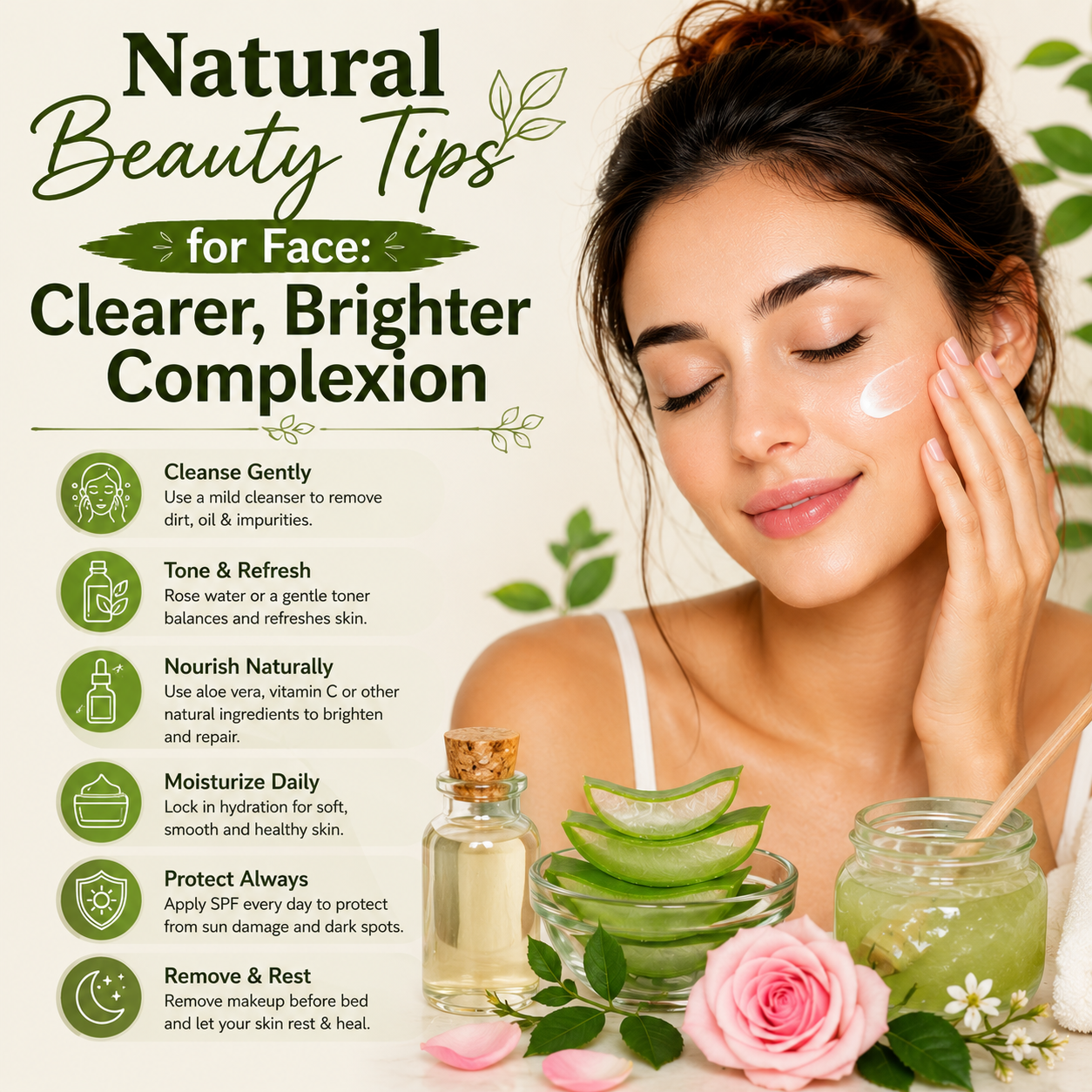
Every day, your face is exposed daily to environmental stressors: UV radiation, dry air and contact with phones, fabrics, and hands. It is not necessary to complicate a natural beauty routine that is focused on your face. Simpler is often better.
Double Cleansing the Right Way
Every face routine is incomplete without cleansing. The goal is to remove dirt and impurities from your face without removing the natural oils that act as a barrier.
The following is a gentle double-cleansing technique. Use a natural oil such as jojoba oil or sweet almond oil first to dissolve excess sebum, sunscreen and makeup. It is best to massage it in circular movements for 60 seconds, then rinse with warm water. Then, use a gentle water-based cleanser to remove surface bacteria and any residue.
Avoid using hot water to wash your face. Hot water can cause your skin to become tight, irritated, and red. Lukewarm water is a good alternative to hot water.
Rose Water as a Natural Toner
Your pores will be open after cleansing and your skin will be ready to absorb. A natural toner can make a big difference. Rose water has been used for centuries as a natural face-care tip by many cultures. It is well researched and widely accepted.
The pH of rose water is 5.5 which is similar to healthy skin. Rose water helps to restore the acid mantle of the skin after cleansing. It also reduces redness and tightens pores. Antiflavonoids, vitamins C and E and antiflavonoids are also present.
After cleansing, spray or pat gently rose water on your face. Apply your moisturizer immediately after cleansing your face while the skin is still damp. This will lock in hydration.
Targeted Natural Treatments for Common Face Concerns
Tea tree oil dilute in carrier oil with a ratio of 1:9 is a natural remedy that has been clinically proven to be effective for acne-prone skin. In a 2017 study published by the Australian Journal of Dermatology, a 5% gel of tea tree oil reduced acne lesions by 43.64% when compared with a placebo.
Vitamin C serum, derived from kakadu plum or ascorbic acid, is the most effective natural brightening agent available. For best results, apply it in the morning underneath your SPF.
Aloe vera leaf gel can be applied directly to dry patches or flaking skin. Aloe vera gel contains polysaccharides which form a film that holds moisture while still allowing the skin to breathe.
Cold used tea bags placed over closed eyes for 10 mins will reduce dark circles and puffiness due to the caffeine and tannins.
Stop Sleeping in Makeup
It may seem simple, but many women ignore it. The makeup you wear at night can clog your pores and disrupt the natural cell turnover overnight. It also creates an environment that encourages acne-causing bacteria to thrive.
According to Cronin Dermatology’s 2026 Skin Goals Guide, removing your makeup before going to bed is one the most important nightly habits you can have for long-term health. Keep micellar and cotton rounds in your nightstand if you’re too tired to do a full-on routine.
4. Natural Beauty Tips for Hair: Strength, Shine, and Growth
By 2026, there will be a significant shift in the way people talk about natural beauty hair care. Clelia Cecilia Angleon, CEO at Surya Brasil and a haircare expert, says that consumers actively seek products without ammonia. These ingredients can cause scalp irritation, fiber damage, and dryness.
Your hair is a reflection of your health. Your hair’s shine, strength and growth rate are all affected by what you eat, sleep and handle stress. What you need to understand.
Scalp Health Is Hair Health
Hair health begins at the root, not the strand. The scalp is the skin of your head and requires the same care as your face.
Massage your scalp with your fingertips for 4 to 5 minutes daily. This will increase blood circulation and encourage new hair growth. In a 2019 study published by ePlasty, participants experienced a 24 week improvement in hair thickness after standardized scalp massaging.
Add a few drops to your regular scalp massage. This will enhance the effect. In a 2014 study published in Toxicological Research, peppermint essential oil was found to be comparable to minoxidil – a popular hair growth treatment – in stimulating the activity of new hair follicles in test subjects.
Natural Oils That Actually Work for Hair
Hair oils are not all created equal. The research shows that.
Coconut oil is one the most researched natural hair treatments. The unique molecular composition, based on lauric acids, allows the oil to penetrate the shaft of the hair, rather than coating it. It reduces the loss of protein from damaged and undamaged hair. Use it as a treatment before washing your hair. Leave it on for 30 minutes.
Castor oil is used widely to reduce hair loss and improve hair density. Apply the oil to your scalp and roots by massaging it gently.Use argan oil as a finishing product on damp hair. It will reduce frizz and add shine. It also protects against heat. It is non-greasy and lightweight, so it can be used on all hair types.
Avoid These Common Hair Mistakes
Over-washing strips your scalp of its natural oil, which triggers an overproduction of sebum. Two to three shampoos per week are best for most hair types.
Breakage can be caused by brushing wet hair. Start at the ends of the hair and work your way up to the roots using a wide-toothed comb. This method of detangling reduces tension in the hair shaft up to 70% when compared with brushing the hair from the root to the tip.
Heat styling without proper protection can also cause damage. When using heat, apply heat protector first and use the tools at their lowest temperature.
The Diet-Hair Connection Most Guides Ignore
long-term natural beauty decision any young person can make. When you don’t eat enough protein, the body will prioritize organ function over hair growth. This causes shedding, slow hair growth and brittle strands.
For healthy hair, the American Academy of Dermatology suggests at least 50 grams of proteins per day. All of these foods are excellent sources. Women who experience hair loss are often affected by deficiencies of iron, zinc, biotin and vitamin D. Before you invest in topical treatments, a blood test can help identify any deficiencies.
5. Natural Beauty Tips for Teenagers: Simple Routines That Build Good Habits
Natural beauty tips are especially important for teens right now. Social media has led to unrealistic expectations regarding skin texture, pore visibility and flawlessness. Dr. Shasa, an associate professor of dermatology at University of Miami Miller School of Medicine noted explicitly in 2025, that young people are particularly vulnerable to unrealistic beauty expectations promoted online.
Truthfully, healthy teenage skin does not mean perfect skin. At this stage, hormonal changes can cause breakouts, oiliness, and visible pores.
The Three-Step Teen Skincare Rule
Teenagers do not need elaborate routines. Over-saturating the skin with products can cause teenage breakouts. Three-step routines are ideal.
The first step is to use a foaming cleanser that removes excess oil, surface bacteria, and sweat without stripping your skin. Formulas containing niacinamide reduce inflammation and naturally regulate oil production.
The second step is to use a light, non-oily moisturizer. Even oily skin needs moisture. Dehydrated skin produces more oil, leading to breakouts.
Step three: Apply SPF each morning. The sun damage starts to accumulate in the teenage years. Early SPF use is essential.
Managing Teen Acne Naturally
Salicylic acid has the best support for mild to moderate acne. Salicylic acid is derived by willow bark. It works by dissolving dead skin cells which clog the pores.
Tea tree oil diluted is an alternative natural treatment for specific blemishes. Avoid popping or picking pimples as they can introduce bacteria, cause deeper inflammation and result in permanent scarring.
The diet plays a larger role in acne breakouts than many people realize. The Journal of the American Academy of Dermatology published a study in 2018 that found a link between consuming high-glycemic foods such as sugary drinks, processed foods and white bread and an increased severity of acne. One of the best natural beauty tips teenagers with acne can use is to reduce sugar consumption and increase water intake.
6. Natural Beauty Tips for Women: A Complete Daily Routine
What should my daily routine actually look like is the most frequent question beauty editors get. Here is a complete, practical framework for natural beauty tips for women based on the latest dermatologist-approved guidance for 2026.
Morning Routine
Use a mild water-based cleanser. While the skin is still damp, apply a Vitamin C serum to counteract morning oxidative stress. The skin will brighten with time. Then, apply a lightweight moisturizer that contains ceramides to strengthen the skin barrier. Finish off with a mineral broad spectrum SPF at least 30. The entire routine should take no more than four minutes.
If you don’t want to wash your hair that day, use a little argan oil on the ends and mid-lengths, smooth out any frizz and style your hair as usual. Use a sulfate free shampoo and concentrate conditioner only on the ends. Rinse with cool water to add shine.
Evening Routine
Remove makeup and sunscreen using a micellar or oil-based cleanser. Use your water-based cleansers to cleanse again. Use a serum such as a retinol (the plant-based alternative to retinol) or bakuchiol. If needed, apply a night cream with more retinol or bakuchiol.
Use a gentle exfoliant once a week and a hair mask that is nourishing. Over the course of several months, these weekly treatments will produce visible improvements in hair texture, tone and strength.
Lifestyle Habits That Belong in Your Beauty Routine
At least two times a week, change your pillowcase. Dr. Adeline Kikam, a dermatologist board-certified and founder of Brown Skin Derm has identified this as her top beauty resolution for 2026. As you sleep, pillowcases can accumulate bacteria, oil and product residue.
Stress management is not something you should do occasionally, but rather regularly. Cortisol levels that are too high can cause inflammation, increase sebum, and disturb sleep. All of these things directly affect skin quality. Cortisol can be reduced by regular movement, breathing exercises, or even simply spending time outside.
7. Nutrition and Hydration: The Foundation of Natural Beauty
What you eat is visible on your skin, hair, and nails within weeks. This section covers the most impactful dietary changes you can make for natural beauty in 2026.
Foods That Boost Skin Glow Naturally
Fish rich in Omega-3 fatty acid, such as salmon, mackerel, and sardines are great for skin. They reduce inflammation and keep the skin supple. Two servings of fish per week is the goal.
Blueberries and strawberries are the best antioxidant foods. Antioxidants neutralize the free radicals that are generated by pollution, sun exposure and stress. These molecules can break down collagen, accelerating skin aging.
Sweet potatoes contain beta-carotene. This precursor to vitamin A protects the skin from damage caused by sunlight and promotes a healthy, glowing complexion. One medium sweet potatoes provides 120% of your recommended daily vitamin A intake.
Leafy greens such as spinach, kale and arugula contain vitamin C, folate, iron and vitamin K. These nutrients help to reduce dark circles and maintain skin elasticity.
Daily consumption of green tea provides EGCG, a polyphenol with anti-inflammatory properties and photoprotective qualities that have been clinically proven. In a 2011 study, published in the Journal of Nutrition, women who consumed green-tea daily for 12 week showed improvements in skin elasticity and hydration.
What to Reduce for Better Natural Beauty
Sugar intake that is too high can lead to a process known as glycation. This occurs when sugar molecules attach to collagen and elastic fibers and make them rigid and fragile. This is the most important dietary factor that accelerates wrinkles and sagging of skin.
Alcohol dehydrates the skin on a cellular level. It dilates the blood vessels, causing persistent redness. Vitamins B and C are depleted, which are both essential for collagen production.
Water retention is caused by excessive sodium, which can cause puffiness around the eyes, face and lips.
8. Ingredient Comparison Table: Natural vs Synthetic Skincare
The following table compares commonly used ingredients across natural and conventional skincare products so you can make more informed purchasing decisions.
| Concern | Natural Ingredient | Synthetic Equivalent | Evidence Level | Best For |
| Moisturizing | Shea butter, jojoba oil | Petrolatum, dimethicone | Strong for both | All skin types |
| Anti-aging | Bakuchiol, rosehip oil | Retinol | Strong for retinol | Sensitive and mature skin |
| Brightening | Vitamin C (ascorbic acid) | Hydroquinone | Strong for both | Hyperpigmentation |
| Acne treatment | Tea tree oil, salicylic acid | Benzoyl peroxide | Strong for all | Oily and acne-prone skin |
| Sun protection | Zinc oxide, titanium dioxide | Avobenzone, oxybenzone | Strong for all | Sensitive and daily-use |
| Hydration | Hyaluronic acid, aloe vera | Glycerin, urea | Strong for all | Dehydrated and dry skin |
| Exfoliation | Glycolic acid (from cane) | Synthetic AHA/BHA | Strong for both | Dull and uneven skin tone |
| Hair strengthening | Coconut oil, argan oil | Silicones | Moderate to strong | All hair types |
| Scalp stimulation | Peppermint oil, rosemary | Minoxidil | Moderate for natural | Thinning or slow-growing hair |
This table incorporates information that most competitor guides completely omit, namely the evidence level for each ingredient. That distinction matters because it separates genuine natural beauty solutions from trends with no scientific backing.
FAQ: People Also Ask
What are the best natural beauty tips for glowing skin?
The most effective natural beauty tips for glowing skin include drinking at least eight glasses of water daily, applying mineral SPF 30 every morning, using a vitamin C serum, sleeping seven to nine hours, and eating antioxidant-rich foods like berries and leafy greens. Consistency matters more than any single product or shortcut.
What natural beauty tips work best for the face?
For the face, the most impactful natural beauty tips include double cleansing with a gentle oil followed by a water-based cleanser, using rose water as a toner, applying aloe vera gel for hydration and redness, and never sleeping in makeup. Keep your routine simple and consistent rather than layering multiple products.
What are natural beauty tips for teenagers with acne?
Teenagers with acne should use a gentle salicylic acid cleanser twice daily, apply diluted tea tree oil as a spot treatment, avoid picking pimples, drink plenty of water, and reduce high-sugar foods and dairy, which research links to increased acne severity. Avoid harsh scrubs and over-washing.
How can I grow my hair naturally and faster?
To grow hair faster naturally, massage your scalp for five minutes daily to boost blood flow, use a peppermint or rosemary oil treatment once a week, eat adequate protein (at least 50 grams daily), and reduce heat styling. Deficiencies in iron, biotin, and vitamin D are leading causes of slow growth, so a blood panel can help identify any gaps.
What natural beauty tips for skin should I follow daily?
Daily natural beauty tips for skin include cleansing twice, applying SPF without fail every morning, moisturizing with ceramide-rich products, staying hydrated, eating skin-supportive foods, changing your pillowcase twice a week, and getting adequate sleep. These six habits deliver results that no product can replicate on their own.
Are natural beauty products actually better than chemical ones?
Not automatically. Natural ingredients can be genuinely effective, but the term “natural” is unregulated. What matters is the evidence behind each ingredient, not whether it comes from a plant or a lab. Many natural ingredients like glycolic acid, zinc oxide, and hyaluronic acid are both natural and scientifically validated. Focus on evidence and your skin’s response rather than marketing labels.
What natural beauty tips are best for women over 30?
For women over 30, the most impactful natural beauty tips include introducing a bakuchiol or retinol serum to stimulate collagen production, using a richer ceramide moisturizer to combat dryness, applying SPF and antioxidants daily, incorporating omega-3 rich foods into the diet, and getting regular facials or gentle chemical exfoliation to accelerate cell turnover.
Can diet alone improve my skin and hair?
Yes, significantly. Research shows that reducing sugar, increasing water intake, eating fatty fish twice weekly, and consuming adequate protein can produce visible improvements in skin texture, tone, and hair strength within six to twelve weeks. Nutrition is the foundation that every external beauty routine builds on. Without it, even the best topical products deliver limited results
Conclusion
In 2026, natural beauty tips aren’t about reducing your daily routine to a minimum or following every social media trend. It is about a consistent and evidence-based approach for caring for your body, hair, skin, and other parts of the body.
These are the three main takeaways that you should get from this guide. The basics are more important than anything else. Water, SPF protection, sleep and nutrition form the basis of natural beauty, which no serum or trend will replace. Simpler routines are more effective than complex ones, particularly when they are maintained over a period of months, rather than weeks. Third, the ingredients are more important than the labels. Focus on the facts rather than the claims made by the packaging.
You will see and feel the difference if you follow even half the natural beauty tips contained in this guide. Start by focusing on one section. Then, add more sections as you develop a new habit.
Your daily routine has always been the most effective beauty tool.
A very well written article reader can get a deep insight of natural versus synthetic skin care…
A very well written article reader gets deep insight of naturl versus synthetic skin care…
That’s great
very hopefull content