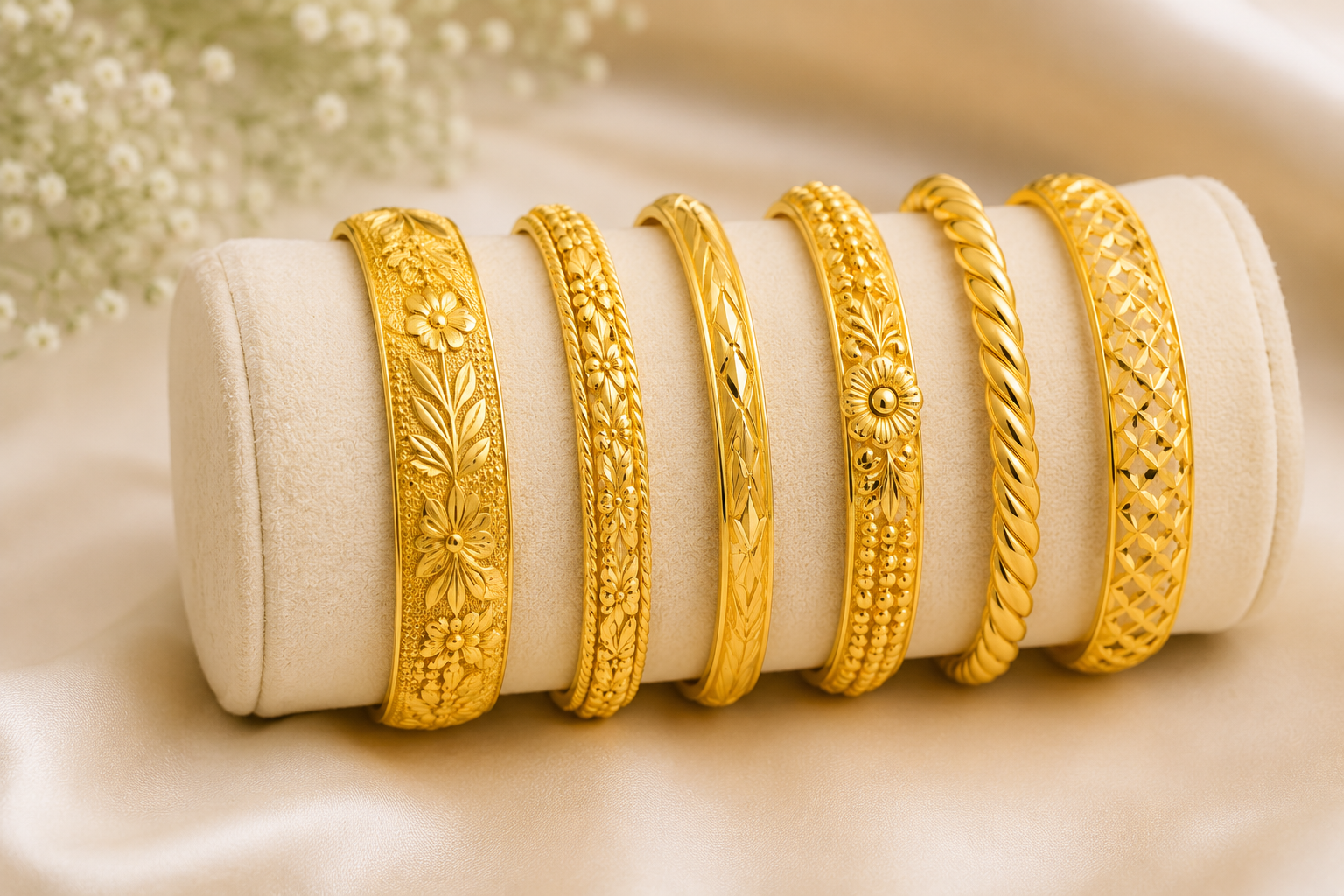
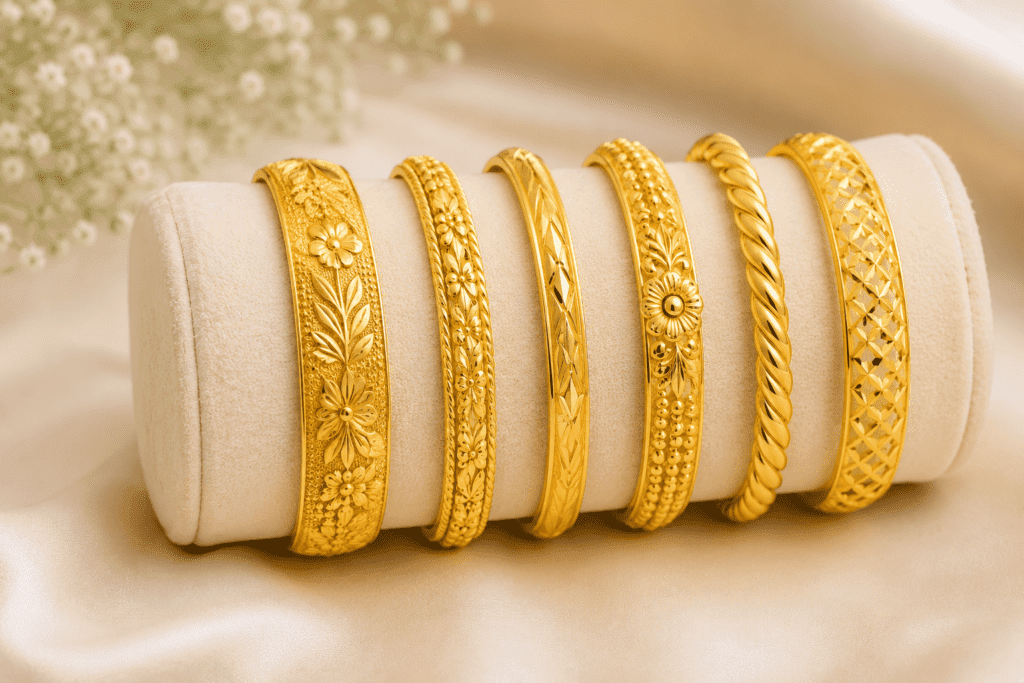
Gold Bangle: Best Styles & Buying Guide 2026
Demand for gold jewelry continues to grow worldwide, driving a market worth more than $122 billion in 2024 and projected to reach over $212 billion by 2033. Right at the heart of that growth sits one of the most beloved wrist accessories ever made: the gold bangle. Whether you are shopping for your first real gold bangle bracelet, trying to figure out if the one you own is authentic, or simply want to learn how to style gold bangles for every occasion, you have come to the right place.
A gold bangle is not just jewelry. It is a piece of history, a cultural symbol, and for millions of women across the USA and the world, a daily expression of identity.
In this guide you will learn the difference between yellow gold, white gold, and rose gold bangles, how to tell if a bangle is real gold right at home, which cultures wear gold bangles for marriage, how to measure your bangle size, how to style and stack them like a pro, and much more. Let us dive in.
Table of Contents
- What Is a Gold Bangle and Why Does It Matter?
- Types of Gold Bangles You Should Know About
- What Culture Wears Gold Bangles for Marriage?
- Is a Cartier Bangle Real Gold?
- How to Tell If a Bangle Is Real Gold
- How to Measure Gold Bangle Size at Home
- How to Style and Wear Gold Bangles Like a Pro
- How Do You Care for Polish Gold Bangles at Home?
What Is a Gold Bangle and Why Does It Matter?
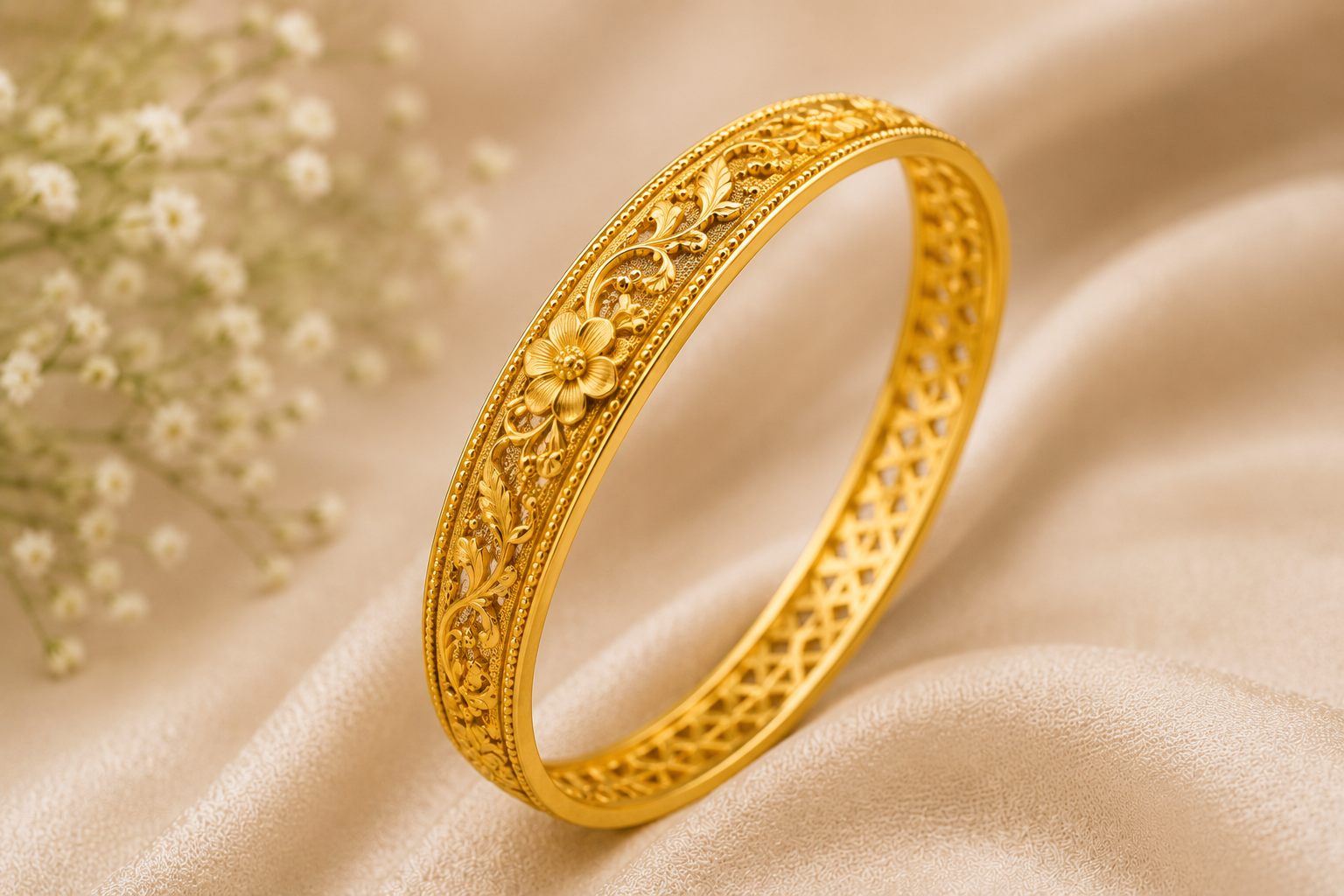
A gold bangle is a rigid, circular bracelet made fully or partially from gold. Unlike a chain bracelet, which is flexible and features links, a bangle holds its shape. It slides over the hand to rest on the wrist. Bangles can be solid, hollow, open-cuff style, or hinged, and they come in a range of gold purities from 10k all the way up to 24k gold bangles.
The appeal of a gold bangle is timeless. Bangle-style jewelry has been found at archaeological sites dating back thousands of years, including excavations at the ancient city of Taxila in modern-day Pakistan. Today, the U.S. jewelry market alone was valued at $78.40 billion in 2024, and gold remains the top material of choice for women aged 25 to 44, the fastest-growing demographic in that market.
What makes a gold bangle different from a regular bracelet? Three things:
- It is rigid and holds a fixed circular shape.
- It must be slid over the knuckles to be worn (unless it has a hinge or opening).
- It makes that signature musical clinking sound when stacked, which many cultures consider joyful and auspicious.
Understanding those basics helps you shop smarter and style more confidently.
Types of Gold Bangles You Should Know About
Gold bangles come in a wide variety of metals, purities, and styles. Knowing the differences saves you money and prevents disappointment after a purchase.
Yellow Gold Bangle
A yellow gold bangle is the classic choice. The warm, rich tone comes from mixing pure gold with copper and zinc. Most yellow gold bangles sold in the USA are 14k gold, meaning they contain 58.3% pure gold. A gold bangle bracelet 14k is the sweet spot for everyday wear because it is durable yet genuinely valuable.
Higher-end pieces include 18k yellow gold bangles, which contain 75% pure gold. These are softer and more brilliant in color but also more prone to scratching. For traditional or cultural purposes, 22k and 24k gold bangles are popular choices, especially in South Asian and Middle Eastern markets. However, 24k pure gold is so soft that it bends easily and is not practical for daily wear.
White Gold Bangle
A white gold bangle gets its cool, silvery tone from mixing pure gold with white metals like palladium or nickel, then coating the surface with rhodium plating. This gives it a bright, platinum-like look. White gold bangles have surged in popularity in the USA over the past decade because they pair beautifully with diamonds and suit cooler skin tones.
One thing to know: the rhodium plating on a white gold bangle will wear off over time, usually after one to three years of daily wear. When that happens, the bangle may start to show a slightly yellowish tint. A jeweler can re-plate it for a modest fee.
Rose Gold Bangle
A rose gold bangle gets its warm blush color from a higher copper content in the gold alloy. Rose gold typically contains about 75% gold and 25% copper. It became a major trend starting around 2015 and has stayed popular because of its romantic, feminine aesthetic.
Rose gold bangles work beautifully on warm and neutral skin tones. They also mix and match well with yellow gold when you want to create a layered, mixed-metal stack.
Gold Cuff Bangle
A gold cuff bangle is an open-ended bangle that does not form a complete circle. Instead, it has a gap that allows it to be slid onto the wrist from the side rather than over the knuckles. Cuff bangles gold styles are incredibly popular in the USA because they are adjustable and easy to put on.
A mens gold cuff bangle has also seen a significant rise in popularity. Male celebrities and athletes wearing thick, open-cuff bangles in yellow or white gold have pushed this category into mainstream men’s fashion. Cuff bangles for men tend to be wider and heavier than women’s styles.
Real Gold Bangles vs. Gold Filled vs. Gold Plated
This is where a lot of shoppers get confused. Here is a simple breakdown:
| Type | Gold Content | Durability | Value |
| Solid Gold (10k-24k) | 41.7% to 99.9% pure gold | Excellent, lasts a lifetime | High |
| Gold Filled | 5% gold bonded to base metal by heat | Good, lasts 10-30 years | Moderate |
| Gold Plated | Thin layer of gold electroplated onto base metal | Low, fades in months | Low |
| Gold Vermeil | Gold plated over sterling silver | Moderate | Moderate |
Real gold bangles are solid gold. They carry a hallmark stamp like 10k, 14k, 18k, 585, or 750. Gold filled bangles are a popular middle ground. They contain a genuine bonded layer of gold and are far more durable than plated pieces. However, they are not real gold bangles in the traditional sense.
Tiffany Gold Bangle
The Tiffany gold bangle is one of the most searched and purchased designer bangles in the United States. Tiffany and Co. uses 18k gold for most of its bangle collection, including the iconic T collection and the Hardwear line. A Tiffany gold bangle typically starts at around $2,000 and can run well above $10,000 for diamond-set pieces.
The brand’s quality control is rigorous. Every piece is stamped with the Tiffany hallmark and gold karat mark, making authenticity relatively easy to verify.
What Culture Wears Gold Bangles for Marriage?
Gold bangles carry deep marital and spiritual significance across several of the world’s major cultures. If you have ever wondered what culture wears gold bangles for marriage, the answer spans multiple traditions across Asia, the Middle East, and beyond.
Indian Culture and the Sacred Role of Gold Bangles
In Indian culture, gold bangles are among the most important symbols of marriage. For Hindu women, being bare-wristed after marriage is considered inauspicious. Gold bangles represent the health, luck, and prosperity of a married woman and her husband. The tradition mirrors the role that a wedding ring plays in Western culture.
Different regions of India have their own bangle customs:
- North Indian brides, especially in Punjab, traditionally wear a set of red and white bangles called the Chura, given by the maternal family. These are often mixed with solid gold bangles and worn for at least 40 days after the wedding.
- South Indian brides wear gold bangles known as valayal. These are typically family heirlooms passed down through generations and represent the goddess Lakshmi, the deity of wealth and prosperity.
- Bengali brides wear shakha pola, a combination of white conch-shell bangles and red coral bangles. Gold bangles are added alongside them as a sign of the family’s status and blessings.
- Maharashtrian brides traditionally wear green glass bangles called chooda, interspersed with solid gold bangles called patlya.
According to the Sikh tradition, a woman is not supposed to buy her own wedding bangles. They must be gifted as a blessing.
Chinese Wedding Traditions and Gold Bangles
Chinese brides also wear gold bangles on their wedding day, though for somewhat different reasons. Gold has long been associated with wealth, good fortune, and happiness in Chinese culture. Gold bangles engraved with the double happiness symbol are a traditional wedding gift from the bride’s parents or in-laws, symbolizing an everlasting bond between the couple. The circular shape of the bangle, with no beginning or end, represents eternity in Chinese custom.
Middle Eastern and South Asian Traditions
In many parts of the Middle East, Pakistan, and Bangladesh, gold bangles are part of the bridal trousseau. The weight and quantity of gold bangles a bride receives is considered a reflection of the family’s wealth and generosity. 24k gold bangles are especially prized in these regions because of their purity and investment value.
Is a Cartier Bangle Real Gold?
Yes. Cartier bangles are made from real, solid 18k gold. This is one of the most commonly asked questions about luxury jewelry, and the answer is straightforward.
The Cartier Love bangle, one of the most iconic gold cuff bangles in the world, is crafted entirely from 18-karat gold. That means each piece contains 75% pure gold mixed with 25% other alloys for durability. Cartier offers the Love bangle in three gold colors: yellow gold, white gold, and rose gold bangle variations.
Cartier does not produce gold-plated fine jewelry. Every single Cartier gold piece is solid 18k gold. The brand stamps each piece with an “AU 750” hallmark, which is the international standard notation for 18k gold (750 parts per thousand of pure gold).
One important detail most guides miss: the Cartier screwdriver that comes with the Love bangle is only gold-plated, not solid gold. The bracelet itself is solid, but the tool is not.
A Cartier Love bangle in yellow gold typically retails between $6,900 and $11,000 new, depending on size and whether it includes diamond accents. On the resale market, Cartier bangles hold their value exceptionally well, often selling for close to retail price years after purchase.
If you are questioning whether a Cartier bangle you own or are considering buying is genuine, look for:
- The Cartier signature engraved on the interior.
- A serial number unique to the piece.
- The AU 750 or 750 hallmark.
- Significant weight. An 18k gold bangle is noticeably heavier than gold-plated alternatives.
How to Tell If a Bangle Is Real Gold
Knowing how to tell if a bangle is real gold can save you from spending real money on fake jewelry. There are several tests you can perform at home, though none of them are as definitive as a professional jeweler’s assessment.
Check for Hallmark Stamps
This is always your first step. Look inside the bangle with a magnifying glass or loupe for a small stamped number. Common stamps include:
- 10k or 417 (41.7% gold)
- 14k or 585 (58.5% gold)
- 18k or 750 (75% gold)
- 22k or 916 (91.6% gold)
- 24k or 999 (99.9% gold, pure gold)
If there is no hallmark, that is a red flag. However, some antique pieces may have worn marks, so absence alone is not definitive proof of a fake.
The Magnet Test
Gold is not magnetic. Hold a strong neodymium magnet close to the bangle. If the bangle is attracted to the magnet, it contains iron or other ferromagnetic metals and is either fake or gold-plated over a base metal. If it does not react, that is a good sign. However, some fake gold uses non-magnetic metals, so the magnet test alone is not conclusive.
The Float Test
Drop the bangle into a glass of water. Real gold is very dense and will sink immediately to the bottom. A fake bangle made from lighter metals may float or sink slowly. This works best with smaller, lighter pieces.
The Ceramic Test
Drag the bangle gently across an unglazed ceramic tile or piece of porcelain. Real gold leaves a gold-colored streak. A fake or gold-plated piece often leaves a black streak. This test can cause minor surface scratches, so use it with caution on fine pieces.
The Lighter Test
Hold the bangle over a flame for about 60 seconds. Real gold does not change color or burn when heated. Fake gold or gold-plated pieces will often discolor, darken, or show the base metal beneath. This test can cause damage, so it is best used only when you need a definitive answer on a lower-value piece.
The Acid Test
A professional gold testing kit uses acid to confirm purity. These kits are available online for $15 to $40 and test for different karat levels. You scratch a small area of the bangle onto a testing stone, apply an acid solution, and observe the reaction. Different karats produce different color reactions.
Professional XRF Testing
For absolute certainty, take the bangle to a jeweler who uses an X-ray fluorescence (XRF) spectrometer. This device identifies the exact metal composition without causing any damage. Most reputable jewelers offer this service and can give you a definitive karat reading within minutes.
How to Measure Gold Bangle Size at Home
Getting the right size is critical for comfort and wearability. Bangles do not stretch or adjust (unless they are cuff styles), so measuring correctly before you buy is important.
Measuring for a Closed Bangle
A closed bangle must slide over your knuckles, so you measure your hand, not your wrist.
Step one. Tuck your thumb firmly into your palm and bring all four fingers together, as if you are sliding on a bangle.
Step two. Wrap a soft measuring tape or a strip of paper around the widest point of your hand, usually just below the knuckles including the thumb knuckle.
Step three. Note the measurement in inches or centimeters. This is your hand circumference.
Step four. To find the bangle’s required inner diameter, divide the hand circumference by 3.14 (pi). For example, if your hand measures 7 inches around, divide by 3.14 to get approximately 2.23 inches, which is close to a standard medium bangle size.
Most U.S. standard bangle sizes range from 2.25 inches to 2.75 inches in internal diameter. A 2.5-inch diameter bangle is the most common standard size.
Measuring for a Cuff or Open Bangle
Open bangles and gold cuff bangles are measured differently because they do not need to slide over the hand.
Step one. Wrap the measuring tape around your wrist, just above the wrist bone.
Step two. Keep it snug but not tight.
Step three. That measurement is your wrist circumference. Add about half an inch to one inch for comfortable movement.
Using an Existing Bangle to Find Your Size
If you already own a bangle that fits well, lay it flat on a hard surface. Place a ruler across the center of the bangle and measure the internal diameter from one inner edge to the other. That measurement is your bangle size in diameter, and you can match it to a size chart when shopping.
Standard Bangle Size Chart
| Size Label | Inner Diameter | Fits Hand Circumference |
| Extra Small | 2.25 inches (57mm) | Up to 6.75 inches |
| Small | 2.375 inches (60mm) | 6.75 to 7 inches |
| Medium | 2.5 inches (64mm) | 7 to 7.5 inches |
| Large | 2.625 inches (67mm) | 7.5 to 7.75 inches |
| Extra Large | 2.75 inches (70mm) | 7.75 inches and above |
How to Style and Wear Gold Bangles Like a Pro
Learning how to style gold bangles is one of the most enjoyable parts of owning them. Gold bangles are genuinely versatile and work across casual, business, and formal settings.
How to Wear Gold Bangles for Everyday Looks
For daily wear, a single sleek yellow gold bangle bracelet worn on its own creates a clean, polished look. Pair it with a simple white tee and jeans for effortless style. This “less is more” approach is especially effective with wider, statement bangles.
If you want to add texture, stack two or three thin bangles together. Mixing a yellow gold bangle with a rose gold bangle and a white gold bangle creates a modern mixed-metal stack that looks intentional and current.
How to Stack Gold Bangles
Stacking is the most popular way to wear gold bangles right now. Here are the key rules:
- Start with a statement piece. Choose one bangle that anchors the stack. A wide 14k yellow gold bangle or a textured cuff works perfectly.
- Vary the widths. Mix thin and wide bangles for visual contrast.
- Mix gold tones intentionally. A yellow gold bangle bracelet for women pairs beautifully with a rose gold or white gold piece.
- Add texture. Mix hammered, polished, twisted, and plain finishes for a collected, not matchy look.
- Odd numbers look best. Three or five bangles typically stack more naturally than two or four.
Styling Gold Bangles for Formal and Evening Wear
For formal events, real gold bangles in 18k or 22k create an elegant, luxurious wrist. A single wide yellow gold cuff bangle worn alone makes a powerful statement with an off-shoulder gown or formal blazer.
Alternatively, a full arm of stacked bangles creates dramatic, festive appeal that works beautifully at weddings, galas, and holiday events. South Asian and Middle Eastern style inspiration has strongly influenced Western fashion here.
Styling Gold Bangles for Men
A mens gold cuff bangle works exceptionally well as a solo wrist accessory. Men typically wear a single, wider cuff bangle on the non-dominant wrist. Yellow gold remains the most popular choice for men, though white gold cuff bangles have a sleek, modern appeal.
Avoid over-stacking as a man unless that is a deliberate fashion statement. One substantial gold cuff bangle paired with a watch on the opposite wrist is the cleanest, most confident look.
How Do You Care for Polish Gold Bangles at Home?
Taking care of your gold bangles at home is straightforward and does not require expensive products.
How to Polish Gold Bangles at Home
Polishing gold bangles at home is easy with the right approach.
Step one. Mix a few drops of mild dish soap with warm (not hot) water in a small bowl.
Step two. Soak the bangle for 15 to 20 minutes.
Step three. Use a soft-bristled toothbrush to gently scrub any crevices or textured areas.
Step four. Rinse thoroughly under warm running water.
Step five. Dry with a soft, lint-free cloth.
Step six. Use a jewelry polishing cloth to buff the surface to a shine. These are available for under $10 at most jewelry stores and online.
Avoid ultrasonic cleaners for bangles with gemstones, as vibrations can loosen stone settings. Also avoid harsh chemicals like bleach or ammonia on gold bangles, as these can damage the metal or discolor gemstone accents.
How to Remove a Tight Gold Bangle from Your Hand
This is a question that comes up more often than you might expect. If a gold bangle has become stuck on your wrist, do not panic. Do not force it.
The most effective method:
Step one. Elevate your hand above your head for two to three minutes to reduce any swelling.
Step two. Apply a generous amount of hand lotion, petroleum jelly (Vaseline), or liquid soap to your entire hand and wrist.
Step three. Rotate the bangle in small circular motions rather than pulling straight.
Step four. Gently work the bangle toward and over the widest part of your knuckles using a slow, rocking motion.
Step five. If the bangle still will not budge, try placing your hand in a bowl of cold water for a few minutes. Cold can cause slight contraction of the fingers.
If you have any concern about circulation or pain, see a jeweler or medical professional. Most jewelers can remove a stuck bangle without damaging it.
How to Reshape a Gold Bangle
If a gold bangle has bent or lost its shape, do not attempt to bend it back by hand without some support. The safest approach is to take it to a professional jeweler who has mandrels (metal rods) in the proper bangle shapes and sizes. A jeweler can reshape most solid gold bangles without causing cracks or damage.
For a minor reshape at home, place the bangle on a wooden bangle mandrel or a round bottle of the appropriate size and gently press or tap it back into shape using the palm of your hand. Never use metal tools directly on the bangle surface.
How to Store Gold Bangles
Proper storage extends the life and luster of your bangles.
- Store each bangle separately or wrap them in soft cloth to prevent scratches.
- Keep them in an airtight jewelry box or zip-lock bag to reduce tarnishing from humidity.
- Avoid storing gold bangles near silver, as silver can cause surface oxidation on gold over time.
- Remove bangles before swimming, showering, or applying products like hairspray, perfume, or lotion directly on the wrist.
FAQ: People Also Ask About Gold Bangles
What is the difference between a gold bangle and a gold bracelet?
A gold bangle is a rigid, circular wrist accessory that holds its shape without flexibility. A gold bracelet is typically flexible, made of linked or chained sections. Bangles must be slid over the hand, while bracelets usually have a clasp. Both are popular choices, but bangles are more commonly associated with stacking and cultural traditions.
What culture wears gold bangles for marriage?
Indian culture is the most closely associated with gold bangles as a marriage symbol. Married Hindu and Sikh women are traditionally expected to wear gold bangles as a sign of marital status, luck, and prosperity. Chinese brides also wear gold bangles engraved with the double happiness symbol. Middle Eastern and South Asian cultures similarly use gold bangles as essential bridal jewelry.
Is a Cartier bangle real gold?
Yes, Cartier bangles are made from solid 18k gold, which is 75% pure gold. Cartier does not produce gold-plated fine jewelry. Every piece is hallmarked with AU 750, confirming gold purity. The Cartier Love bangle comes in yellow gold, white gold, and rose gold versions. The accompanying screwdriver tool, however, is only gold-plated.
How do I know if my gold bangle is real gold?
Look for a hallmark stamp inside the bangle (10k, 14k, 18k, 585, 750, or 916). Then perform the magnet test: real gold is not attracted to a magnet. Drop it in water to see if it sinks quickly. For certainty, visit a jeweler for XRF testing. The combination of a hallmark plus a non-magnetic test provides strong home confirmation.
What karat is best for a gold bangle?
For everyday wear in the USA, a 14k gold bangle is the most practical choice. It contains 58.3% pure gold, is durable enough for daily use, and offers real value. For special occasions or investment pieces, 18k gold bangles are preferred. 22k and 24k gold bangles are popular in cultural and traditional settings but scratch more easily.
How do I measure my gold bangle size?
Tuck your thumb into your palm and bring all four fingers together. Wrap a tape measure or paper strip around the widest part of your hand just below the knuckles. Divide that measurement by 3.14 to find the inner diameter you need. The average U.S. women’s bangle size is 2.5 inches in inner diameter.
Can men wear gold bangles?
Absolutely. A mens gold cuff bangle is a sophisticated, fashionable accessory that has grown significantly in popularity across the USA. Men’s styles tend to be wider and heavier than women’s bangles. A single yellow or white gold cuff bangle worn on the non-dominant wrist creates a clean, confident look.
How do I remove a tight gold bangle from my hand?
Elevate your hand to reduce swelling, then apply hand lotion, petroleum jelly, or liquid soap generously across your hand and wrist. Work the bangle slowly in a rocking, rotating motion toward your fingers rather than pulling it straight off. Cold water can help slightly contract your fingers. If it will not come off, see a jeweler.
Conclusion
The gold bangle has earned its place as one of the most enduring and meaningful pieces of jewelry in human history. From the bridal traditions of India and China to the luxury showcases of Cartier and Tiffany, a gold bangle bracelet connects culture, identity, and personal style in a way few accessories can match.
Here are three key takeaways from this guide:
First, know your gold. Whether you choose a yellow gold bangle, a white gold bangle, or a rose gold bangle, understanding the karat and the difference between solid, gold-filled, and gold-plated pieces ensures you spend your money wisely.
Second, verify before you buy. Use the hallmark check, magnet test, and float test at home, then get professional XRF testing when it matters.
Third, size and care make the difference. Measure correctly using your hand circumference, and clean and store your real gold bangles properly to keep them brilliant for decades.
Ready to find your perfect gold bangle? Use everything you have learned here to shop with confidence, style with intention, and wear your gold bangle as the timeless statement piece it truly is.