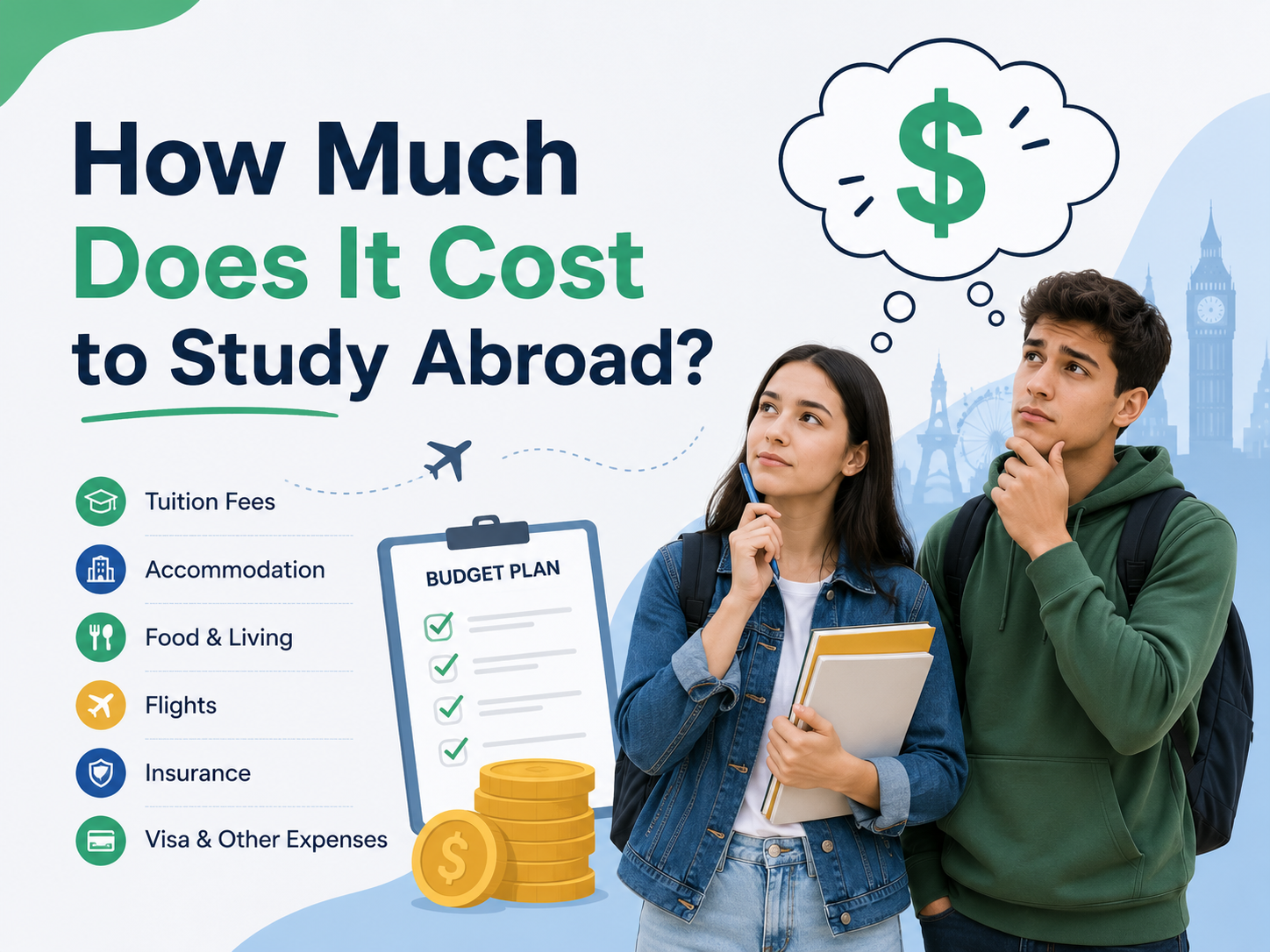
How Much Does It Cost to Study Abroad in 2026? The Complete Breakdown
Studying abroad can cost as little as 3,000 dollars for a summer or more than 20,000 dollars for a single semester, depending on where you go and how you enroll. That is a massive range, and it is exactly why so many students end up guessing instead of planning. If you have typed “how much does it cost to study abroad” into Google more than once this month, you are not alone.
This guide breaks the numbers down country by country, program type by program type, so you are not left comparing vague estimates. In this guide you will learn what a semester, a month, and a full year abroad really costs, how prices shift depending on whether you pick the UK, Spain, Italy, or Japan, and which hidden fees catch students off guard every single time. We will also walk through direct enrollment versus third party providers, since that single choice can swing your bill by thousands of dollars.
Everything here is built from current 2026 data, university fee schedules, and reporting from the Institute of International Education. No fluff, no recycled estimates. Just the numbers you actually need to build a real budget.
Table of Contents
What Is the Average Cost to Study Abroad
How Much Does It Cost to Study Abroad in College
Study Abroad Cost by Country: A Full Comparison
What Does a Month or a Year Abroad Actually Cost
Hidden Costs Nobody Warns You About
How Can You Pay for Studying Abroad
Direct Enrollment vs Third Party Providers
Is Studying Abroad Actually Worth the Money
FAQ Section
What Is the Average Cost to Study Abroad
The average cost to study abroad for one semester sits between 15,000 and 22,000 dollars when you go through a third party provider, and between 7,000 and 15,000 dollars when you enroll directly with a foreign university [Source: NerdWallet, 2025]. Across all providers and destinations, the overall average lands around 14,295 dollars per semester [Source: GoAbroad, 2026].
That number covers tuition, housing, and usually meals, but not always flights or personal spending. Compare that to a semester at a US out of state public university, which averages roughly 25,620 dollars once you add tuition and living costs [Source: GoAbroad, 2026]. In many cases, going abroad is not more expensive than staying home. It can actually be cheaper.
Why Costs Swing So Much
Three factors drive almost all of the variation you will see:
- Location. Tokyo and Amsterdam cost far more than Bologna or San Jose.
- Enrollment type. Direct enrollment skips the provider markup but leaves you to arrange housing yourself.
- Program length. A two week program might run 3,500 to 6,000 dollars, while a full year can climb past 30,000 dollars once flights and visas are added [Source: Global Learning Opportunities, 2026].
What a Typical Program Fee Actually Includes
Most third party program fees bundle tuition, housing, some meals, on the ground support, and excursions. What they usually leave out is airfare, your passport and visa fees, personal spending money, and often health insurance. Always check the fine print before you compare two programs side by side, because a cheaper sticker price can hide extra costs that show up later.
How Much Does It Cost to Study Abroad in College
For undergraduates, the cost to study abroad in college depends heavily on whether your home university runs its own exchange program or whether you book through an outside provider like CIEE or IES Abroad.
A semester through CIEE averages 19,850 dollars, dropping to about 17,950 dollars in Latin America and rising to roughly 20,950 dollars in Europe [Source: CIEE, 2026]. If your school has a direct exchange partnership, you may pay your normal home tuition rate plus a smaller administrative fee, which can be far cheaper.
Application and Administrative Fees
Third party programs typically charge an application fee between 95 and 150 dollars. On top of that, your home school might tack on its own study abroad administrative fee. The University of Iowa, for example, charges around 1,213 dollars for in state students doing one semester abroad [Source: SoFi, 2025]. These fees are easy to overlook when you are only looking at the headline program price.
Federal Aid Still Applies
Here is something many students do not realize. If your home university participates in federal student aid and approves your specific program, your existing FAFSA aid, grants, and federal loans can usually still be applied toward study abroad costs [Source: SoFi, 2025]. That single fact makes studying abroad accessible to far more students than the sticker price suggests.
Study Abroad Cost by Country: A Full Comparison
Below is a direct comparison of monthly living costs and semester program costs across the most searched destinations for American students.
| Country | Avg Monthly Living Cost | Semester (Direct Enrollment) | Semester (Third Party) |
| United Kingdom | 1,400 to 1,900 USD | 8,000 to 21,000 USD | 12,000 to 17,000 USD |
| Spain | 1,100 to 1,500 USD | 1,500 to 5,500 USD | 11,000 to 14,500 USD |
| Italy | 900 to 1,300 USD | 1,000 to 3,000 USD | 10,500 to 14,000 USD |
| Japan | 1,300 to 2,200 USD | 2,000 to 7,500 USD | 8,000 to 25,000 USD |
| Costa Rica | 700 to 950 USD | 1,000 to 5,000 USD | 8,500 to 11,500 USD |
| China | 600 to 900 USD | 1,500 to 4,000 USD | 6,600 to 12,000 USD |
Figures compiled from Go Overseas, GoAbroad, and Global Work and Travel 2026 cost reports [Source: Go Overseas, 2026].
How Much Does It Cost to Study Abroad from UK
If you are coming from the UK rather than the US, the math shifts because of currency and closer proximity to continental Europe. British students studying in Spain or Italy often spend less on flights and can find semester programs for 6,000 to 10,000 GBP once housing is included. A full year masters in a country like the UK for international students, by contrast, can range from 28,000 to 55,000 GBP total [Source: EduVed Global, 2026]. The takeaway is simple. Where you start from changes your flight costs and your currency exposure, but tuition itself stays roughly the same regardless of your passport.
How Much Does It Cost to Study Abroad in Spain
Public universities in Spain charge international students between 1,000 and 4,500 euros a year, one of the lowest rates in Western Europe [Source: Global Work and Travel, 2026]. Monthly living costs run 1,100 to 1,500 dollars including rent, so a full semester through direct enrollment can total under 10,000 dollars all in. Barcelona and Madrid sit at the higher end, while smaller cities like Salamanca or Granada cost noticeably less.
How Much Does It Cost to Study Abroad in Italy
Italy is one of the best value destinations on this entire list. Public university tuition runs 1,000 to 2,500 euros per year for international students, and there are no extra international student surcharges [Source: Global Work and Travel, 2026]. Rome and Milan living costs land between 800 and 1,200 euros monthly, while cities like Bologna, Padua, and Pisa cost noticeably less without sacrificing quality of life. Combine that with Italy’s rail network, and weekend trips across Europe become genuinely affordable extras rather than budget busters.
How Much Does It Cost to Study Abroad in Japan
Japan looks expensive from the outside, but tuition tells a different story. Public universities charge roughly 500,000 to 1,000,000 yen a year for undergraduates, which converts to about 2,500 to 5,000 GBP, or roughly 3,200 to 6,400 USD [Source: Global Work and Travel, 2026]. Direct enrollment semester costs run 2,000 to 7,500 dollars, but third party providers charge considerably more, from 8,000 to 25,000 dollars per semester because of the added support services [Source: Go Overseas, 2026]. Tokyo living costs are the real budget factor here, averaging 1,300 to 2,200 dollars monthly with rent included.
What Does a Month or a Year Abroad Actually Cost
Program length changes your total cost more than almost any other variable, so it helps to see the numbers side by side.
How Much Does It Cost to Study Abroad for a Month
Short term programs, including summer sessions and language immersion trips, typically run 3,500 to 6,000 dollars total [Source: Global Learning Opportunities, 2026]. This price usually bundles tuition, housing, and some meals into one flat fee, which makes budgeting simple even though the daily cost per day is higher than a longer program. Daily program costs across popular destinations range from 249 to 456 dollars depending on the country, with Japan, Spain, and Italy sitting at the top of that range [Source: Rustic Pathways, 2026].
How Much Does It Cost to Study Abroad for a Year
A full academic year abroad roughly doubles a single semester’s cost, though you usually save a bit through economies of scale on things like housing deposits and flights. The overall Cost of Attendance model, which includes tuition, rent, food, insurance, and personal spending, runs anywhere from 10,000 euros in Germany to over 80,000 dollars in the United States, depending entirely on destination [Source: EduVed Global, 2026]. If you are budgeting a full year in Europe, expect a realistic range of 20,000 to 40,000 dollars total once flights and visa fees are factored in.
Hidden Costs Nobody Warns You About
Even careful planners get blindsided by expenses that never show up in a program brochure.
- Visa and residence permit fees, which run 60 to 100 euros in most of Europe but can climb higher elsewhere [Source: Gradright, 2026].
- Health and travel insurance, which some countries legally require before you can even register for classes.
- Lost part time income back home, since most student visas restrict how many hours you can legally work, if at all.
- Weekend travel, which adds up fast once you are living within a short train ride of five other countries.
- Currency exchange swings, which can shift your real cost by 15 to 30 percent depending on the strength of the dollar at the time [Source: Rustic Pathways, 2026].
A Quick Budgeting Tip
Divide your total program cost by the number of days you will be abroad. This “cost per day” number makes it far easier to compare a two week program against a full semester, since sticker price alone almost always favors the shorter option even when it delivers less value overall.
How Can You Pay for Studying Abroad
Money should never be the sole reason a student skips this experience, and there are more funding paths available than most people realize.
Scholarships and Grants
Universities, governments, and third party providers all offer dedicated study abroad scholarships. European scholarship programs like Charpak in France or the Holland Scholarship in the Netherlands specifically target international students and can cover partial or full tuition [Source: Gradright, 2026].
Federal Financial Aid
As mentioned earlier, FAFSA funded aid generally transfers to approved study abroad programs. This includes federal grants and loans, provided your home institution signs off on the specific program you choose.
Working Part Time While Abroad
Depending on your visa, you may be allowed to work part time, usually capped around 20 hours a week. Countries like Australia offer unlimited work rights for some visa types, while Germany allows up to 120 days a year. Realistic work earnings can offset 30 to 80 percent of living costs depending on the country and city [Source: EduVed Global, 2026].
Direct Enrollment vs Third Party Providers
This single decision affects your total bill more than almost anything else, so it deserves its own breakdown.
What Direct Enrollment Looks Like
You enroll straight into a foreign university, paying only tuition and administrative fees. You arrange your own housing, meals, and support system. It is cheaper, but it demands more independence and research on your part.
What Third Party Providers Include
Companies like IES Abroad and CIEE bundle tuition, housing, meals, excursions, and on site support into one fee. You pay a premium, often two to three times more than direct enrollment, but you gain structure, safety nets, and a built in community.
Which One Actually Saves Money
If budget is your top priority and you are comfortable navigating a new country independently, direct enrollment almost always wins. If you value support, structure, and predictable costs with no surprises, a third party provider is worth the premium, especially for a first time study abroad experience.
Is Studying Abroad Actually Worth the Money
More than 298,180 US students studied abroad for academic credit in the 2023 to 2024 academic year, a 6 percent increase from the year before, with Italy, Spain, the UK, and France remaining the top four destinations [Source: IIE Open Doors, 2025]. That growth suggests students and families increasingly see the return on investment as worth the price tag.
Employers consistently report valuing international experience when hiring, citing skills like adaptability, cross cultural communication, and independent problem solving that are harder to build in a traditional classroom. Whether that return justifies the cost depends on your personal financial situation, your major, and your career goals, so it is worth weighing against other priorities like an internship or a lighter course load at home.
FAQ Section
How much does it cost to study abroad on average?
Most semester programs cost between 14,000 and 22,000 dollars through a third party provider, or 1,000 to 15,000 dollars through direct enrollment. The exact figure depends heavily on your destination country and program length.
Is it cheaper to study abroad in Europe or Asia?
Asia is generally cheaper, averaging around 9,000 dollars a semester compared to roughly 16,000 dollars in Europe [Source: GoAbroad, 2026]. China and parts of Southeast Asia offer some of the lowest costs worldwide.
Can financial aid cover study abroad costs?
Yes. Federal aid, including FAFSA grants and loans, typically applies as long as your home university approves the specific program and participates in federal student aid.
What is the cheapest country to study abroad in?
China, Costa Rica, and several Central American countries consistently rank among the cheapest options, with semester costs often under 8,000 dollars including housing.
Do study abroad costs include flights?
Rarely. Most program fees exclude airfare, so budget an extra 500 to 1,300 dollars round trip depending on your destination.
How much does a summer study abroad program cost?
Short term summer and month long programs typically cost 3,500 to 6,000 dollars total, bundling tuition, housing, and some meals into one flat fee.
Is direct enrollment cheaper than a third party provider?
Yes, direct enrollment is usually cheaper because you are only paying tuition and administrative fees, not the added support and housing markup that providers charge.
Do I need a visa to study abroad, and how much does that cost?
Most countries require a student visa for programs longer than 90 days. European visa fees typically run 60 to 100 euros, though costs vary by country and visa type.
Conclusion
Studying abroad does not have to be a financial guessing game once you have real numbers in front of you. Three takeaways matter most. First, semester costs typically range from 7,000 to 22,000 dollars depending on your enrollment type and destination. Second, countries like Italy, Spain, and China consistently offer the best value without sacrificing academic quality. Third, financial aid, scholarships, and part time work can meaningfully reduce your final bill.
Now that you know how much it actually costs to study abroad, the next step is comparing specific programs against your own budget and goals. Start by contacting your school’s study abroad office, ask what federal aid applies, and request a full cost breakdown before you commit to anything.
References and Further Reading
- CIEE, 2026. How Much Does it Cost to Study Abroad in 2026?
- Go Overseas, 2026. How Much Does it Cost to Study Abroad in 2026?
- GoAbroad, 2026. The Average Cost of Study Abroad Programs Around the World.
- SoFi, 2025. How Much Does It Cost to Study Abroad?
- Global Work and Travel, 2026. How Much Does It Cost To Study Abroad in 2026?
- SEED Global Education, 2026. Study Abroad Cost Comparison 2026: A Country wise Analysis.
- EduVed Global, 2026. Cost of Studying Abroad: Complete Guide.
- Gradright, 2026. Cost of Studying in Europe: Tuition and Living Guide.
- Rustic Pathways, 2026. Student Travel Costs by Country 2026.
- Global Learning Opportunities, 2026. Study Abroad Cost Comparison: 2 Week vs Semester Programs.
- Institute of International Education, 2025. Open Doors 2025 Report on International Educational Exchange.